A cracked upper molar: root canal treatment and a same-day crown
A cracked upper molar in a tooth grinder, seen at short notice when biting pain became a constant ache. Treated and rebuilt in a single visit.
Presentation
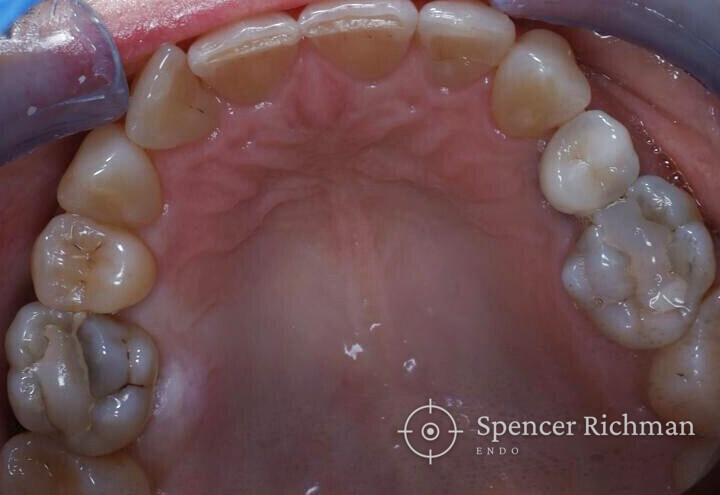
Pain on biting down on an upper back tooth brought her to us directly, without a referral. She already knew she was a tooth grinder, clenching heavily at night for years.
Within a few days the pain changed character. The sharp pain on biting became a constant throbbing ache. We saw her as an emergency.
Assessment
Several fracture lines were evident across the upper left first molar. Under the dental operating microscope, we could trace their path across the tooth.
A change from a brief, sharp pain to a constant ache matters. That pattern points to a nerve that is irreversibly inflamed, not simply irritated.
Years of heavy grinding had loaded this tooth hard. The cracks followed, and in time the nerve became involved and compromised.
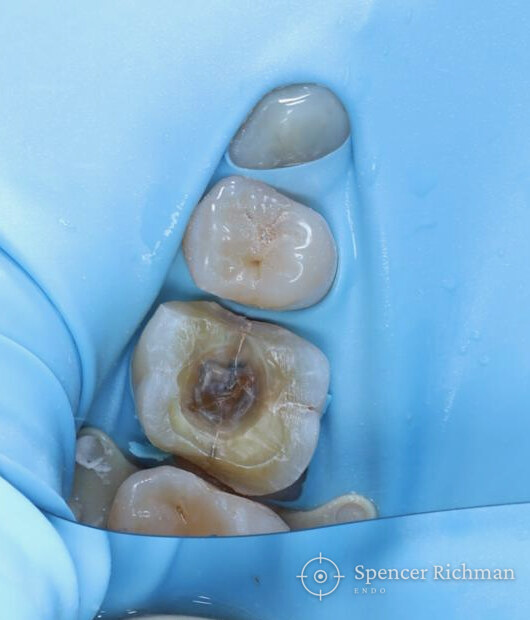
The cracked molar under the dental operating microscope, the old restoration removed.

Before treatment
Treatment
The tooth was treated and rebuilt the same day, alongside Dr Adam White, an experienced restorative clinician at Bellevue Dental Clinic in Wandsworth.
A crack cannot be removed from a tooth. What we can do is reduce the forces acting on the crack.
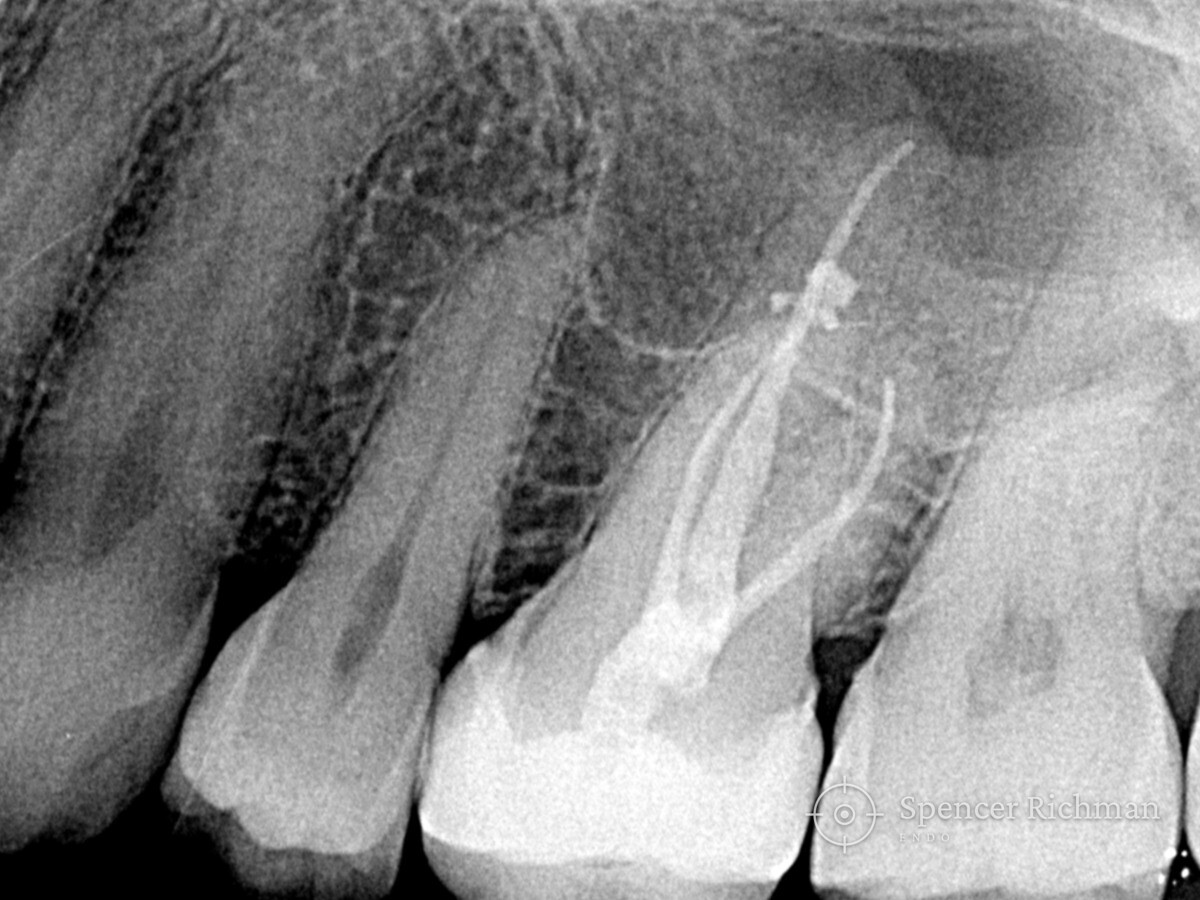
- Cleaned back to sound structure and root treated under the dental operating microscope
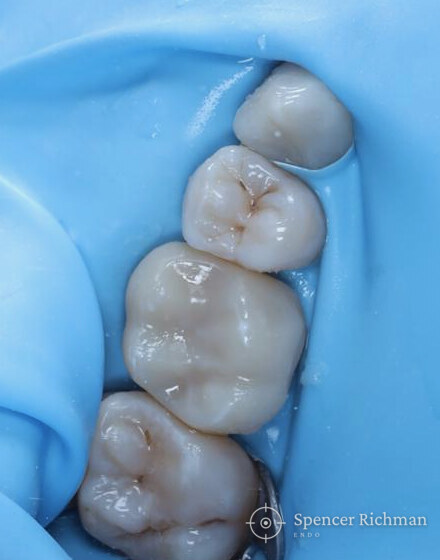
- An all-ceramic crown designed and milled on site by Dr Adam White, fitted at the same visit
- No temporary crown, and no weeks of waiting between stages
- A custom-made bite guard advised to protect the tooth from here
She left with the tooth protected and back in normal function, all finished in one session with us.
The grinding that cracked this tooth has not gone away. A bite guard spreads the load away from single teeth.
Spreading the load helps protect the tooth that has already cracked, and every other tooth in the mouth, from further damage.
After treatment
Review
Questions patients ask
Why does a cracked tooth need a root canal?
A crack lets movement and bacteria reach the nerve. Once that nerve is irreversibly inflamed, treating the root canal system is what settles the tooth.
Why a crown is fitted straight after root canal treatment on the same day
A crack cannot be removed, so a cusp-covering crown is used to hold the tooth together. Fitting the crown straight away reduces the forces acting on the crack.
Do I need a bite guard after treatment?
Yes, and wearing one matters a great deal. Grinding is what loaded this tooth to the point of cracking, and every other tooth is under the same force.
A well-made bite guard, worn at night, is strongly advised. A guard helps protect the tooth that has already cracked, and the rest of the teeth, from further damage.
Published with the patient’s written consent and fully anonymised. Every tooth is different and outcomes vary from case to case, so this case should not be read as a promise of a particular result.
Get in touch