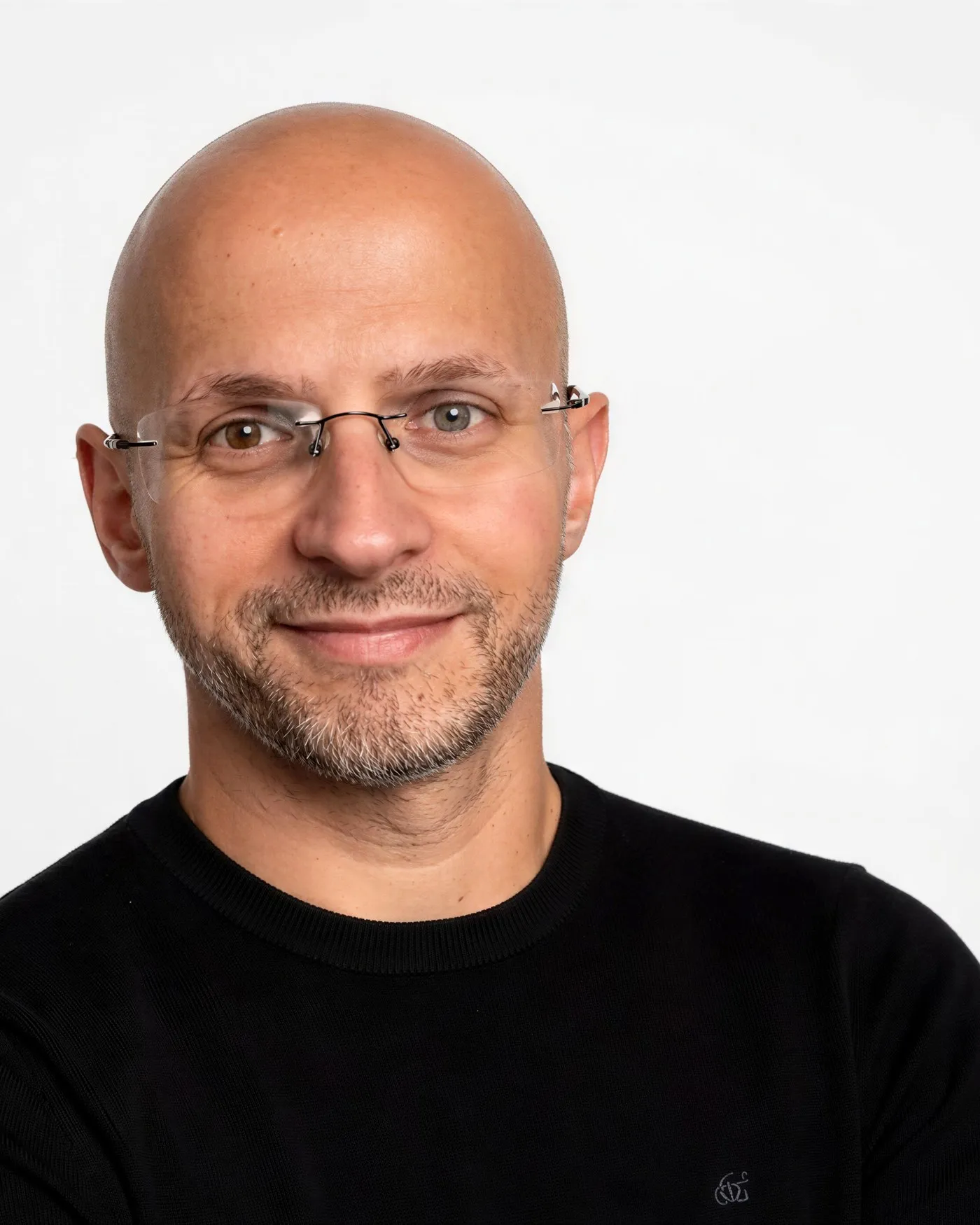
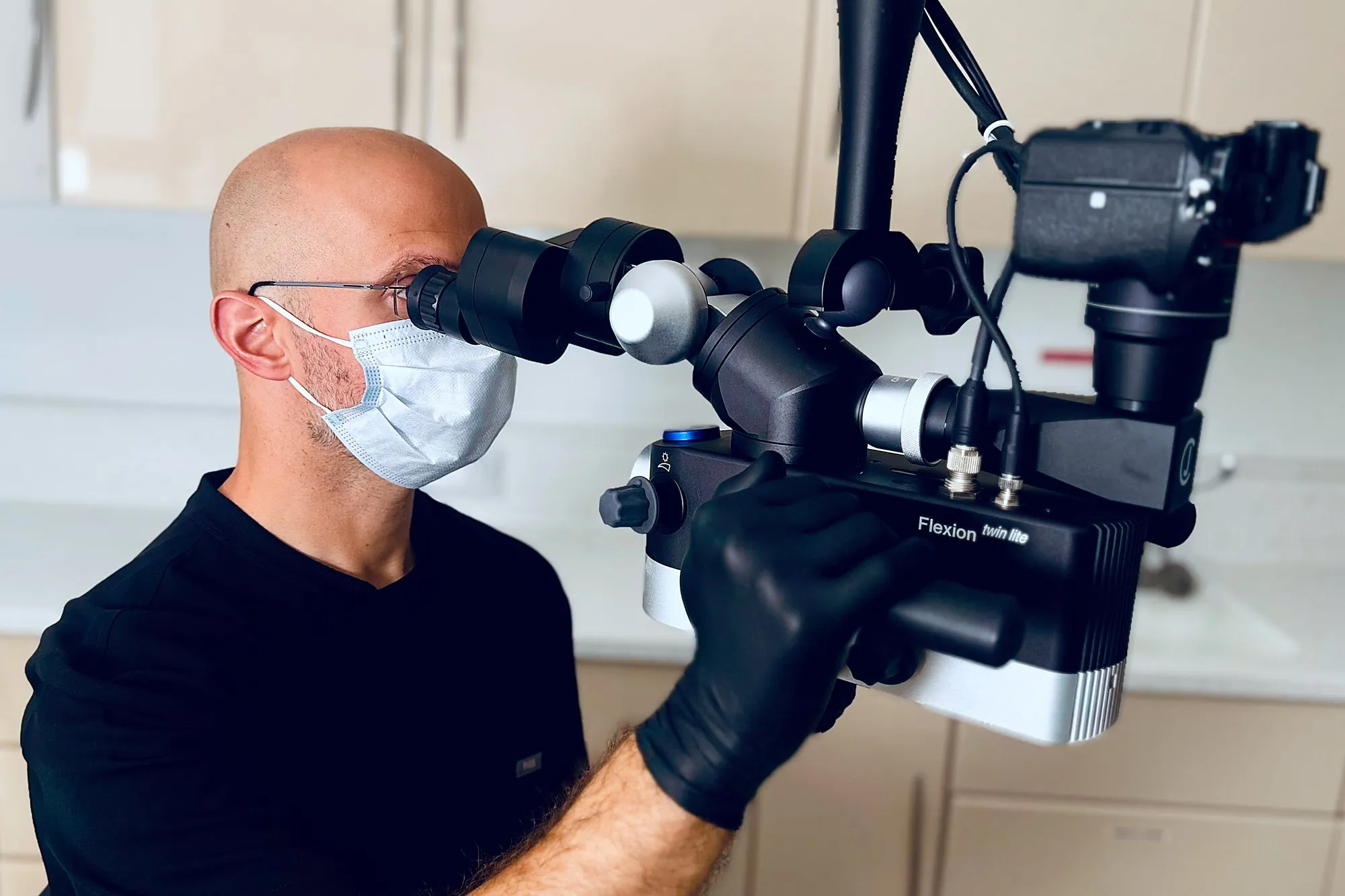
Most people arrive with questions - whether treatment will be comfortable, whether the tooth can be saved, or simply what the whole process involves. My work is limited to endodontics: saving teeth is all I do, every day, under the dental operating microscope. I see patients on referral at several practices across London and Hertfordshire, so there is usually one close by.
Ask your own dentist to refer you - urgent cases are prioritised, particularly where there is facial swelling or the toothache is disturbing your sleep. If you are not registered with a dentist, get in touch and I will point you to the nearest of my practices.
I qualified from the University of Manchester in 2002 and completed my MSc in Endodontology in 2015. My practice has been limited to endodontics ever since, and root canal treatment has been the centre of my working life for far longer than that - every case under a dental operating microscope, with CBCT imaging whenever a tooth needs looking at in three dimensions.
That focus is the point. Guided endodontics for calcified canals, re-treatment of cases that have not settled, cracked teeth, dental trauma and IV sedation for anxious patients are not occasional cases here - they are the work. I teach the same techniques to other dentists as a Key Opinion Leader for Dentsply Sirona and as co-founder of Building Better. I am a member of the British Endodontic Society.
Everything I do is focused on one thing - keeping your natural tooth.

I work across several carefully chosen practices, from the City of London out to Hertfordshire - so expert endodontic care, including treatment with sedation for nervous patients, is always close to you. Each practice is selected because the setting lets me treat every patient with the time and attention their case requires.
The tooth is fully numbed, so for most people treatment feels much like having a filling. Most patients arrive with toothache from an inflamed or infected nerve - the treatment is what resolves that toothache.
Read the full guideLingering sensitivity to hot or cold, pain on biting, a tooth that darkens, or a small pimple on the gum are the usual signs. Some teeth give no symptoms at all and are picked up on an X-ray.
Read the full guideMost cases are completed in a single visit. Complex or heavily infected teeth sometimes need two, and you will be told which at the assessment rather than part-way through.
See the treatmentsWhere the prognosis is good, keeping your own tooth is usually the better option - nothing quite replaces a natural root. Extraction with an implant is an excellent alternative when a tooth cannot be saved.
Read the full guideOften, yes - particularly on back teeth, which take the heaviest load. A root-treated tooth needs a well-sealed permanent restoration to last, and your own dentist provides that restoration.
Read the full guideSay so at the start and the appointment is paced around that anxiety. IV sedation is available through Dr Damien Reilly, Consultant in Special Care Dentistry, for patients who would rather not be aware of the procedure.
Read the full guideMy practice is limited to endodontics and I work only on referral. Your patient stays your patient - they come back to you sealed, temporised and fully documented.
Send the case by WhatsApp with a photograph and a radiograph. You will have an answer within one working day, including whether I think the tooth is worth treating.
What was found, what was done and what the tooth needs next - with images taken down the dental operating microscope, so you can show the patient.
Sealed and temporised, with clear guidance on the permanent restoration and how soon placement should follow.
A scan and a written report where you would rather manage the tooth yourself - useful for suspected cracks, resorption and unexplained symptoms.