A cracked upper molar from grinding: root canal treatment in a young patient
A cracked upper molar in a woman of thirty with a minimally filled mouth, where years of grinding had done the damage instead.
Presentation
A woman of thirty came with pain on biting from an upper right back tooth. The discomfort had been building, and by the time we met the tooth had started reacting to temperature as well.
Her mouth was otherwise barely restored. What she did have was years of grinding, and the wear across her teeth to show for the grinding.
Assessment
The upper right second molar was cracked. Under the dental operating microscope the crack ran across the distal marginal ridge and down the distal wall.

A CBCT scan showed how far the crack travelled: small, running distally, and reaching into the pulp.
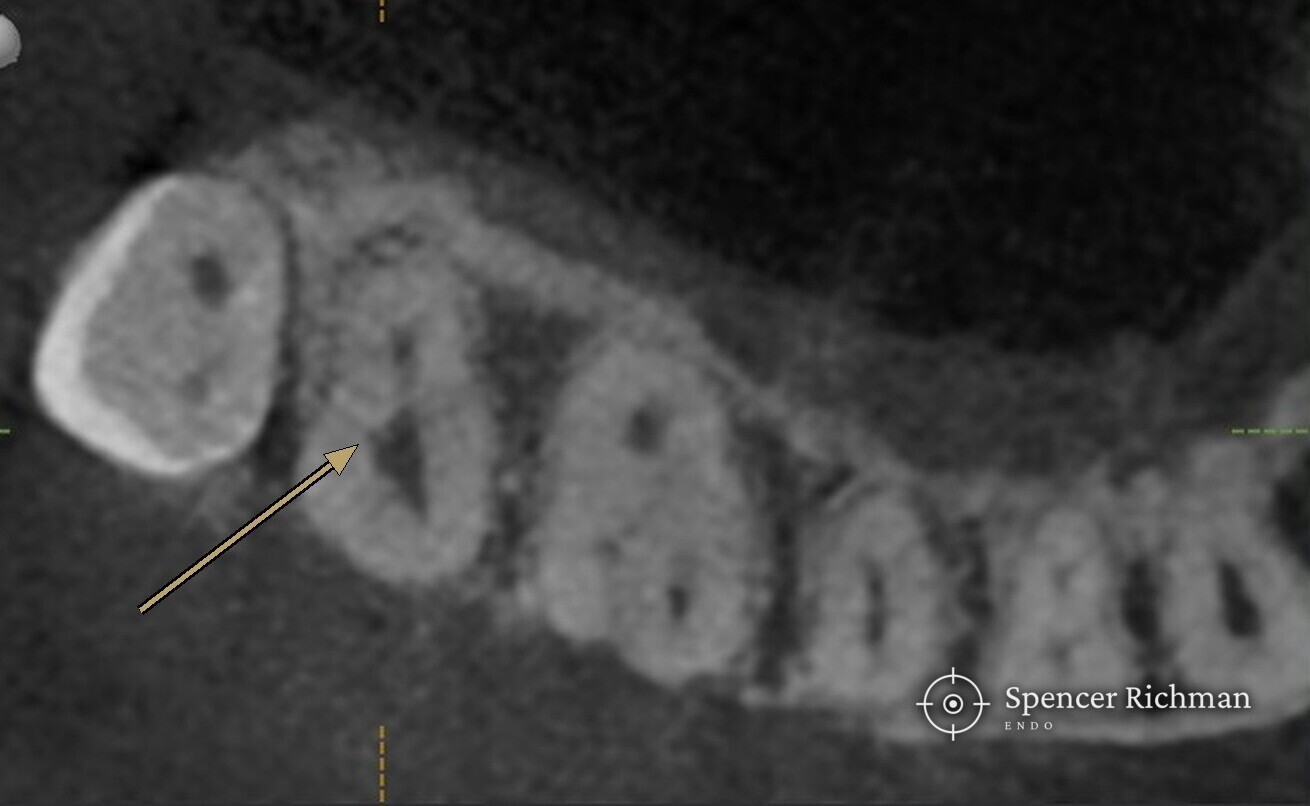
Diagnosis: cracked tooth syndrome with irreversible pulpitis.
There was generalised tooth surface loss across the rest of her teeth, and no bite guard had ever been made for her.

A crack is a loading problem rather than a filling problem. A heavily filled tooth cracks because less structure is left to resist the load; a minimally filled tooth cracks because the load itself is relentless. At thirty, with barely a filling in her mouth, years of grinding had been enough on their own.
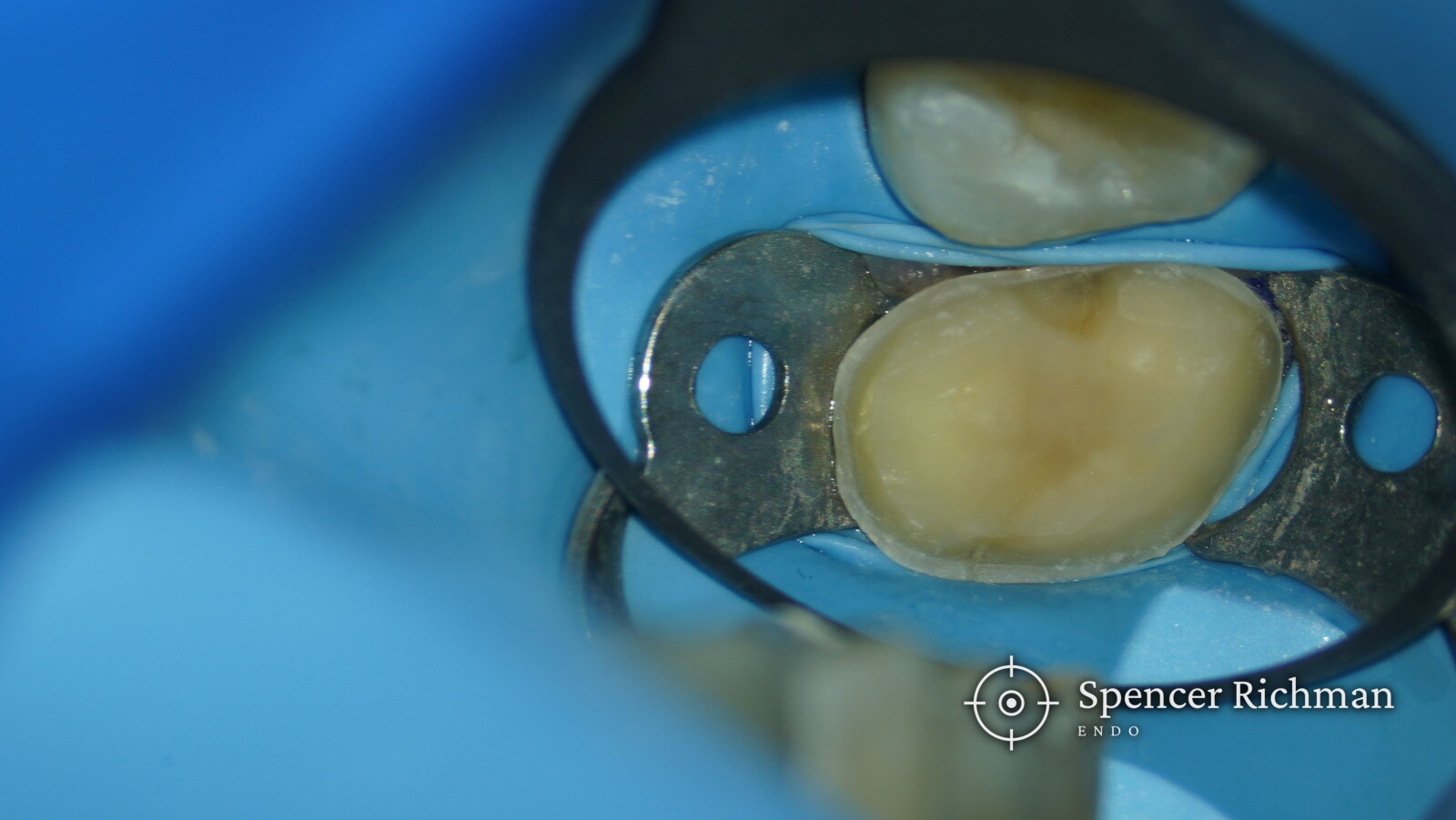
The tooth prepared for the onlay, with the cusps reduced to take the biting load off the crack.

Before treatment
Treatment
Treatment was carried out at Sardinia House Dental Practice in Holborn, with the restorative work carried out by Dr Shivan Dave, who practises at Sardinia House and at Widegate House Dental Practice. Three and a half hours from start to finish, with the onlay fitted at the same visit.
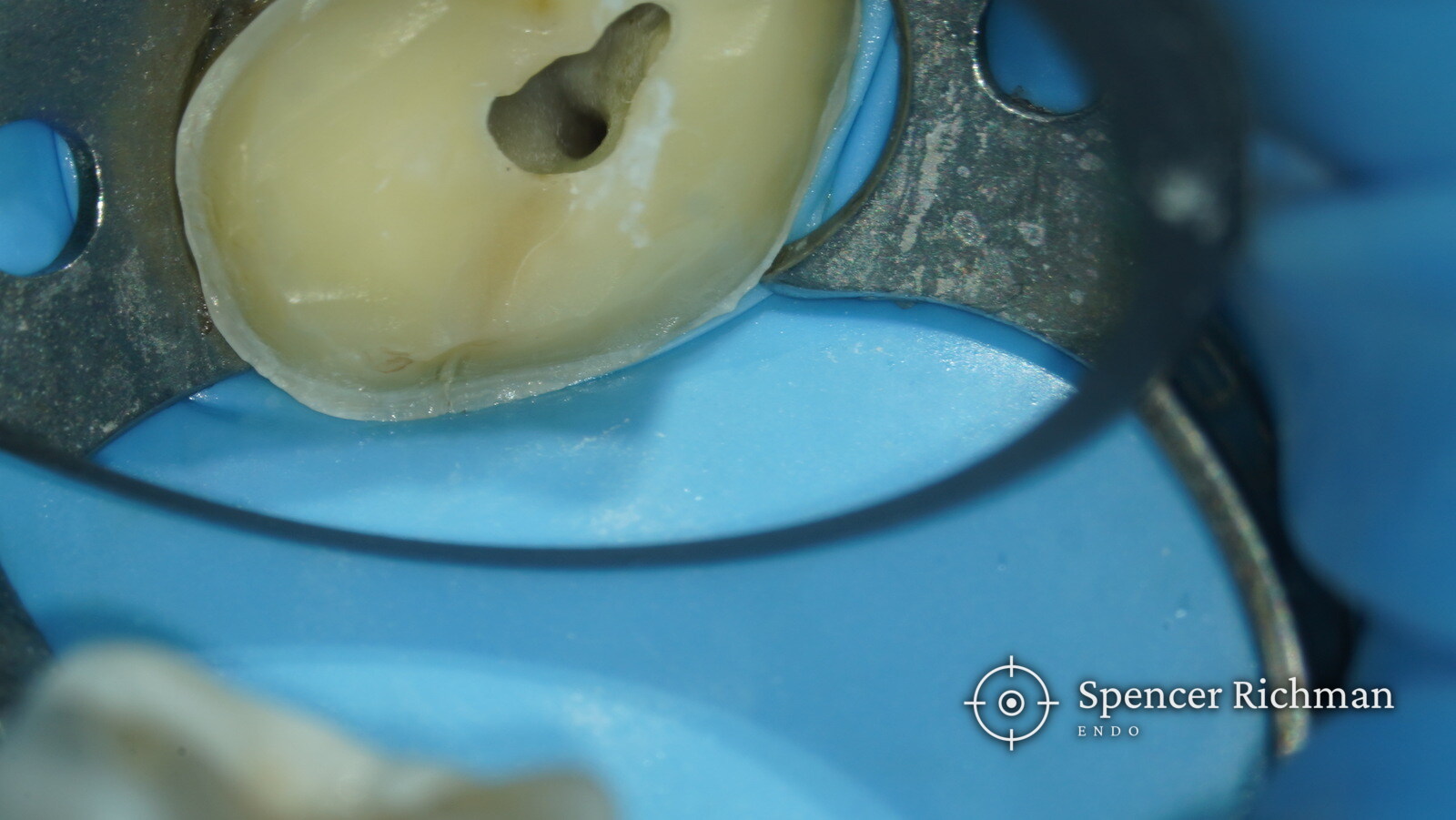
The canals were shaped with TruNatomy files. These instruments are highly flexible and cut less dentine than conventional files. In a tooth already carrying a crack, every millimetre of remaining dentine is structure that helps hold the tooth together, so an instrument that takes less of that dentine matters more here than in an intact tooth.
A crack cannot be removed from a tooth. What the onlay does is cover the cusps and take the load off the crack, which is why the tooth was rebuilt at the same appointment rather than left to be crowned later.
A bite guard is the part of this case that protects everything else. The grinding that cracked this molar is still there, and every other tooth is under the same load. She is also having restorative work to improve the appearance of her front teeth, where the wear shows most.
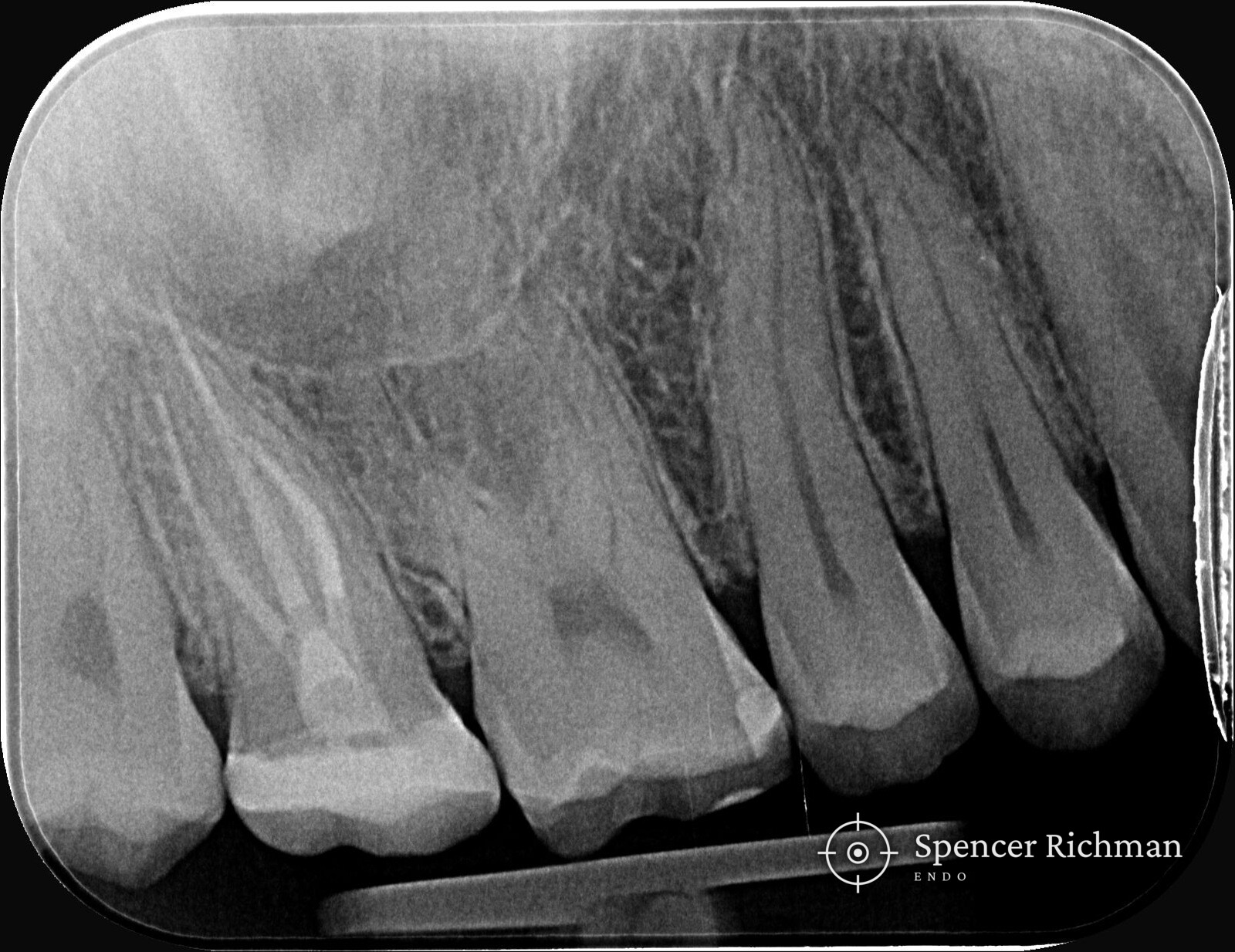
After treatment
Review
Questions patients ask
Can grinding your teeth crack a tooth?
Yes, and grinding is one of the commonest reasons a tooth cracks. Years of heavy clenching load a tooth far beyond the demands of chewing.
Why would a minimally filled tooth crack?
A crack comes from the force a tooth absorbs, not from what has been put into the tooth. A barely filled tooth under years of grinding takes that force with nothing to relieve the load.
Can a cracked tooth be saved?
Often, yes. A crack cannot be removed, so the aim is to reduce what the crack is asked to withstand, which means covering the cusps and taking the grinding load off the tooth.
Do I need a night guard after a cracked tooth?
Wearing one matters a great deal. The guard spreads the load away from single teeth and protects the rest of the mouth as well as the tooth already treated.
Am I too young for a cracked tooth?
Age has less to do with a crack than load does. This patient was thirty, with a minimally filled mouth, and the grinding alone had been enough.
Published with the patient’s written consent and fully anonymised. Every tooth is different and outcomes vary from case to case, so this case should not be read as a promise of a particular result.
Get in touch