Root canal re-treatment: a lower incisor and canine after dental trauma
Two lower front teeth that lost their nerve supply after an injury years earlier, still tender a year after root canal treatment. Re-treated in a single visit.
Presentation
The lower right lateral incisor and canine were injured several years before we met. The nerves inside both teeth did not survive, and over time they died off.
Symptoms from one of them led to root canal treatment on both, carried out by her own dentist.
A year on, both teeth were still uncomfortable. Tapping on either one produced tenderness.
Assessment
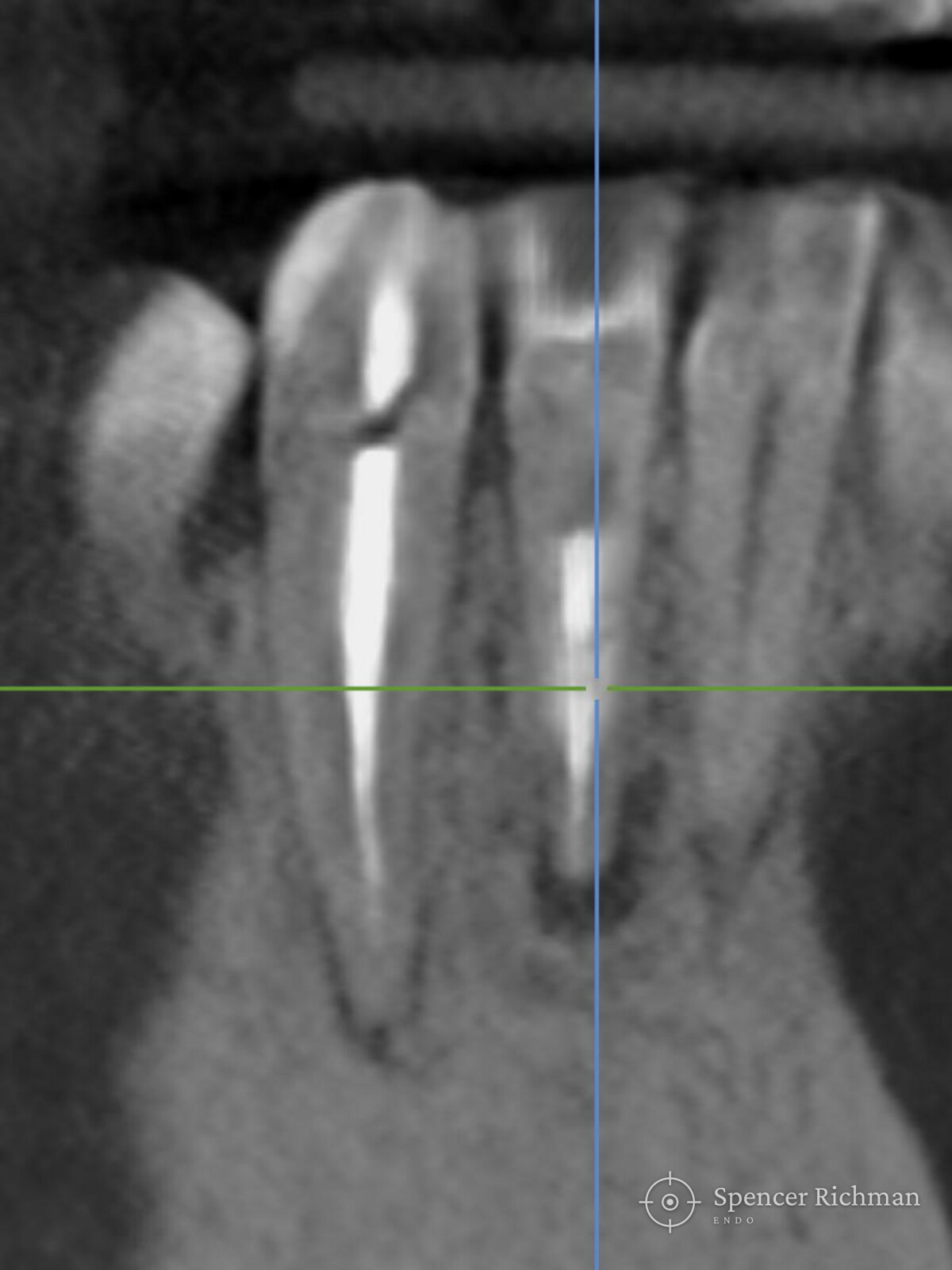
The X-ray showed both root fillings were complete, but each stopped short of the end of the root.
There was also a void in the restoration sitting above one of the root fillings. That leaves a route for bacteria to travel back down into the canal.
A CBCT scan confirmed inflammation in the bone around the end of both roots. A flat X-ray shows those bone changes far less reliably.
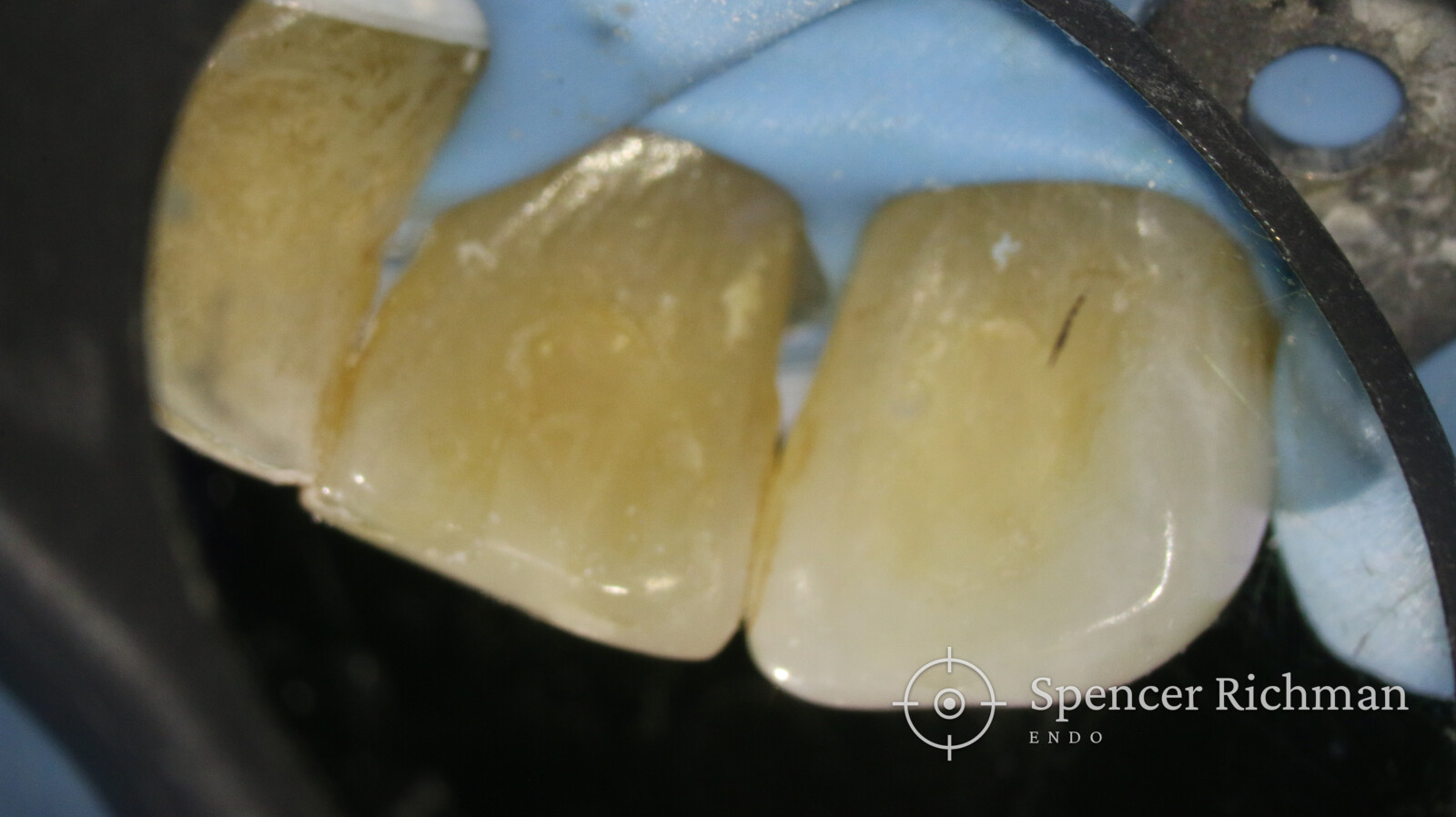
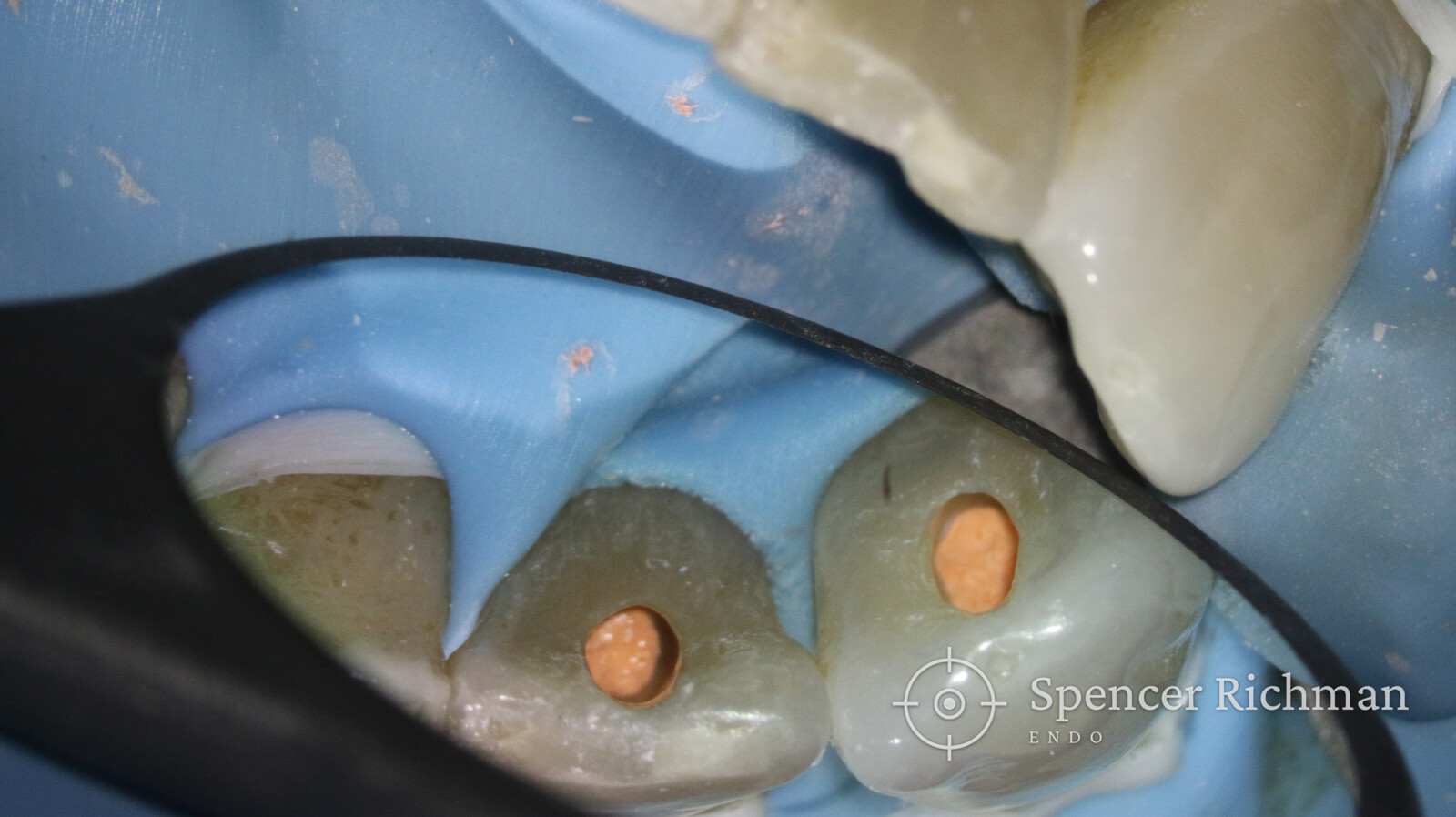
The two teeth isolated under rubber dam at the start of treatment.
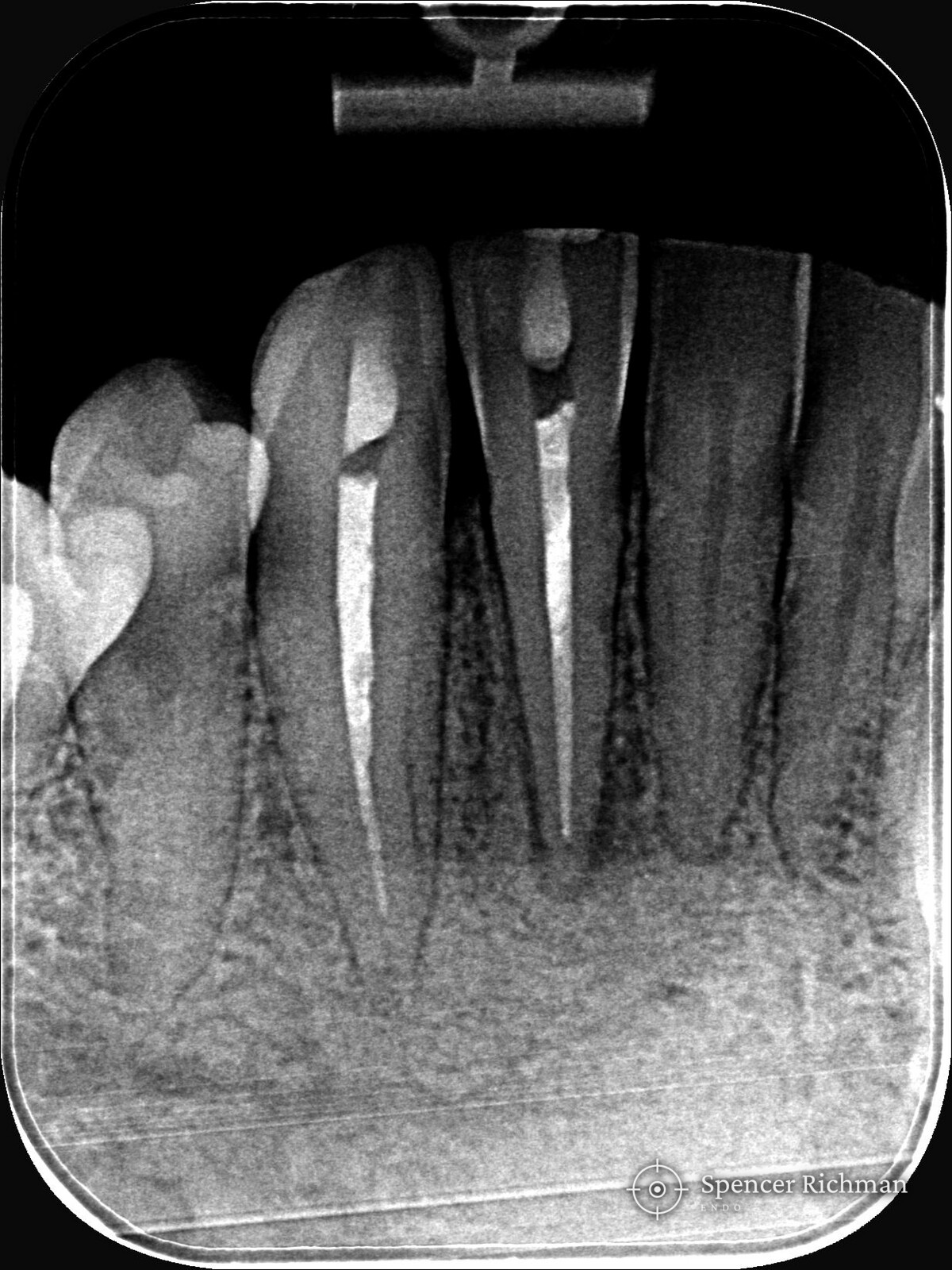
Before treatment
Treatment
Both teeth were re-treated in a single visit, under rubber dam and the dental operating microscope.
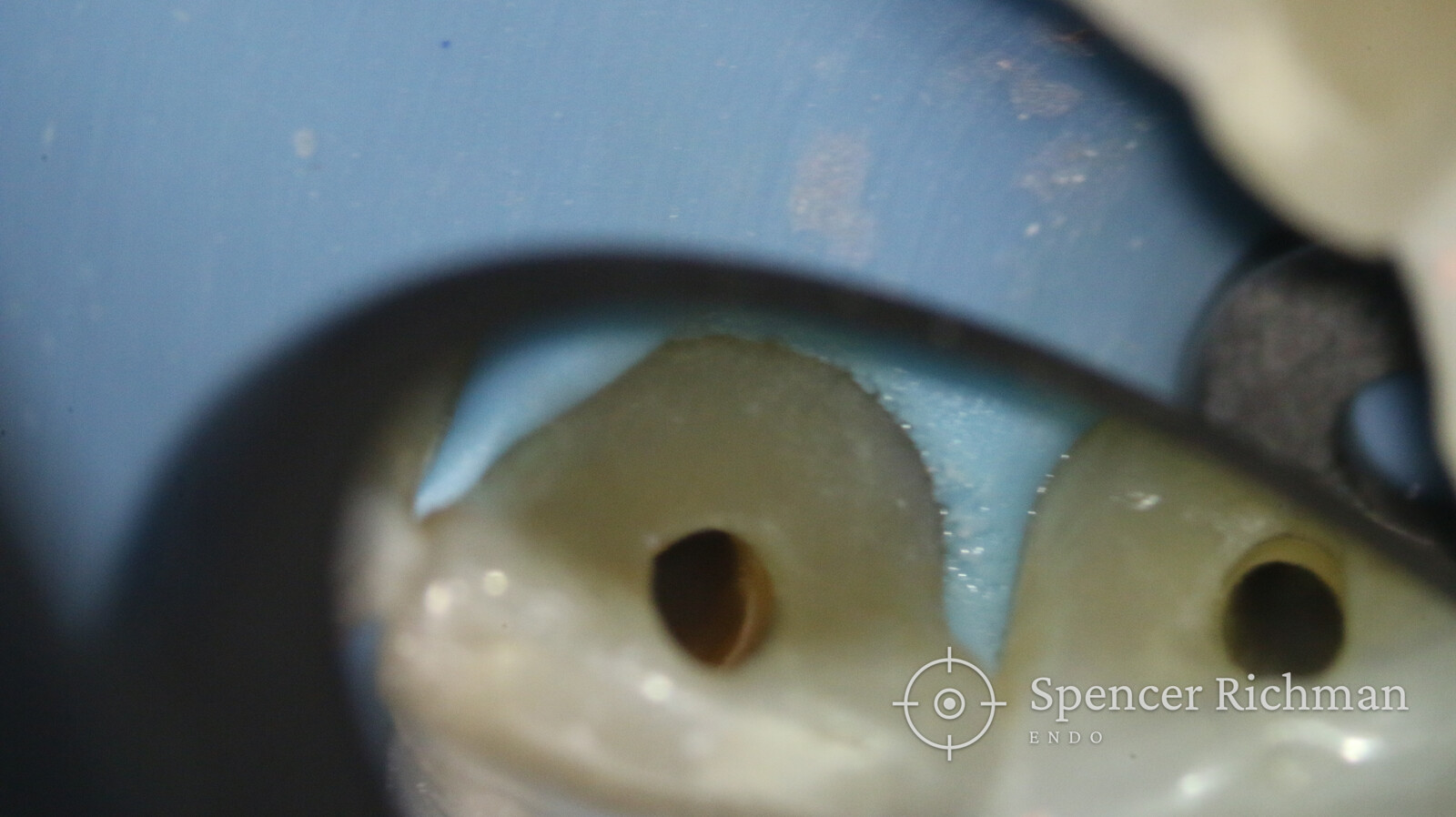
- The previous root filling material softened, removed and the canals cleaned along their full length
- Both canals disinfected, reshaped and sealed to the end of the root
- Completed in one session, with no temporary stage in between
Re-treatment is mostly about reaching what the first attempt could not. The work is in the cleaning rather than the filling.
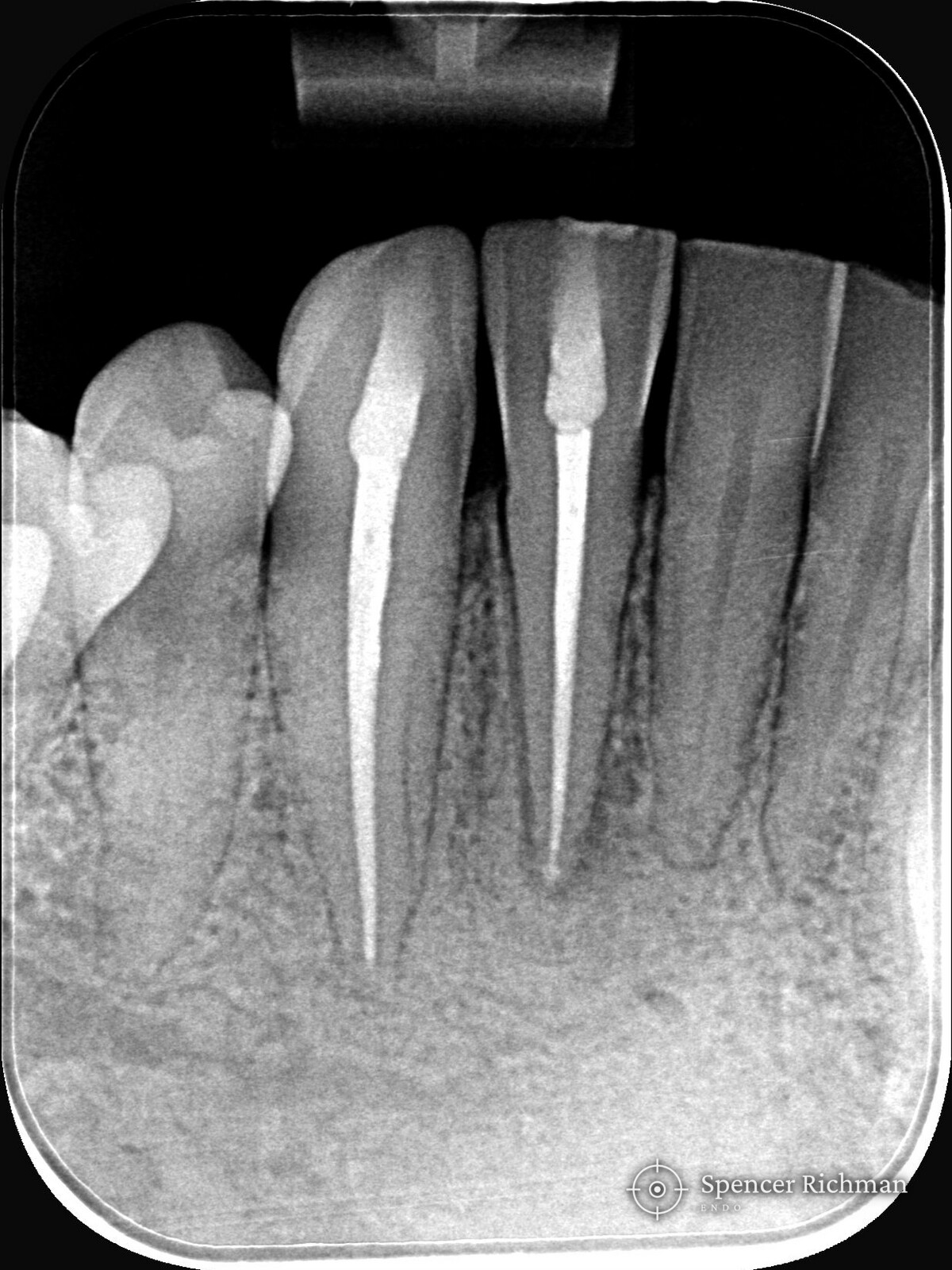
After treatment
Review
2-week review
At two weeks her symptoms had gone. Both teeth were comfortable to bite on and no longer tender to tapping.
Questions patients ask
Why does a root canal need redoing?
Root fillings that stop short leave part of the canal system uncleaned. Bacteria persisting there keep the surrounding bone inflamed.
What does a CBCT scan show that an X-ray does not?
A flat X-ray flattens everything into one plane. A 3D scan shows the bone around each root separately, which is what confirmed the picture here.
Is root canal re-treatment worse than the first time?
Not usually. Re-treatment takes longer, because the previous filling has to come out first, but the appointment is carried out the same way and under the same anaesthetic.
Published with the patient’s written consent and fully anonymised. Every tooth is different and outcomes vary from case to case, so this case should not be read as a promise of a particular result.
Get in touch