A nervous patient: root canal treatment and a crown in one visit, without sedation
A lower molar with a fifteen-year-old amalgam and a nerve that had died, in a patient who was very anxious and declined sedation. Root treated and crowned in a single visit.
Presentation
A woman in her forties came to us directly, without a referral, with intermittent throbbing discomfort from a lower left molar. Hot drinks made the discomfort worse, and cold provoked nothing at all.
She described herself as very anxious about dental treatment. Sedation was offered, and she declined.
The tooth carried an amalgam filling placed more than fifteen years earlier.
Assessment
The molar gave no response to cold testing. In a tooth carrying a large, long-standing filling, an absent response points to a nerve that has died rather than one that is simply irritated.
The symptom pattern fitted. Discomfort provoked by heat and lingering afterwards, with nothing from cold.
The periapical X-ray showed the amalgam running deep toward the pulp chamber, but nothing at the root ends. A CBCT scan showed the change the flat film had missed, along with condensing osteitis - bone around the root becoming denser rather than being lost.
Condensing osteitis develops in response to long-standing, low-grade irritation rather than to sudden infection.
Taking the filling off confirmed the picture. There was no crack, and only a small amount of decay. The filling was simply deep, and had been there a long time.
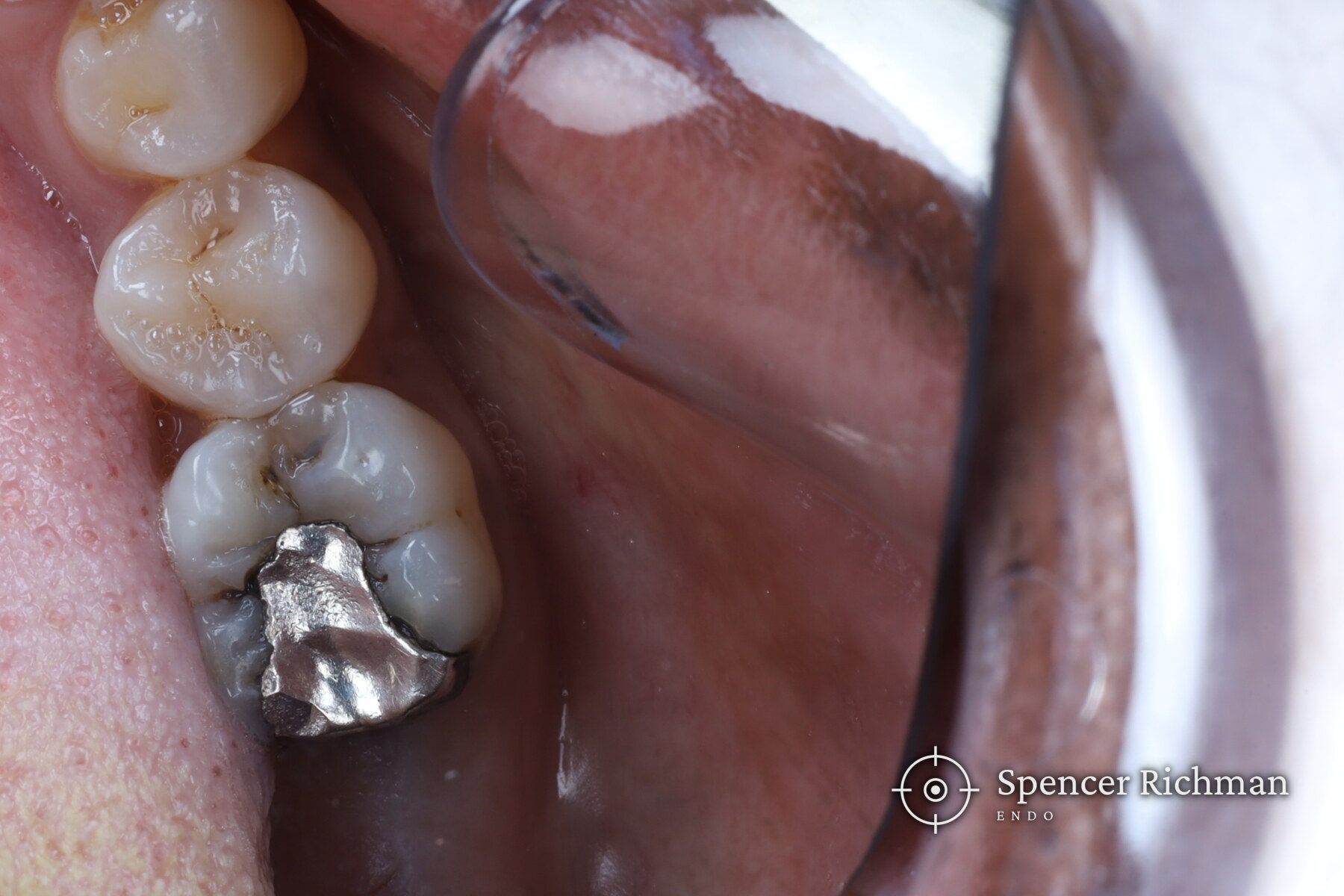
The tooth at the start: an amalgam filling placed more than fifteen years earlier.
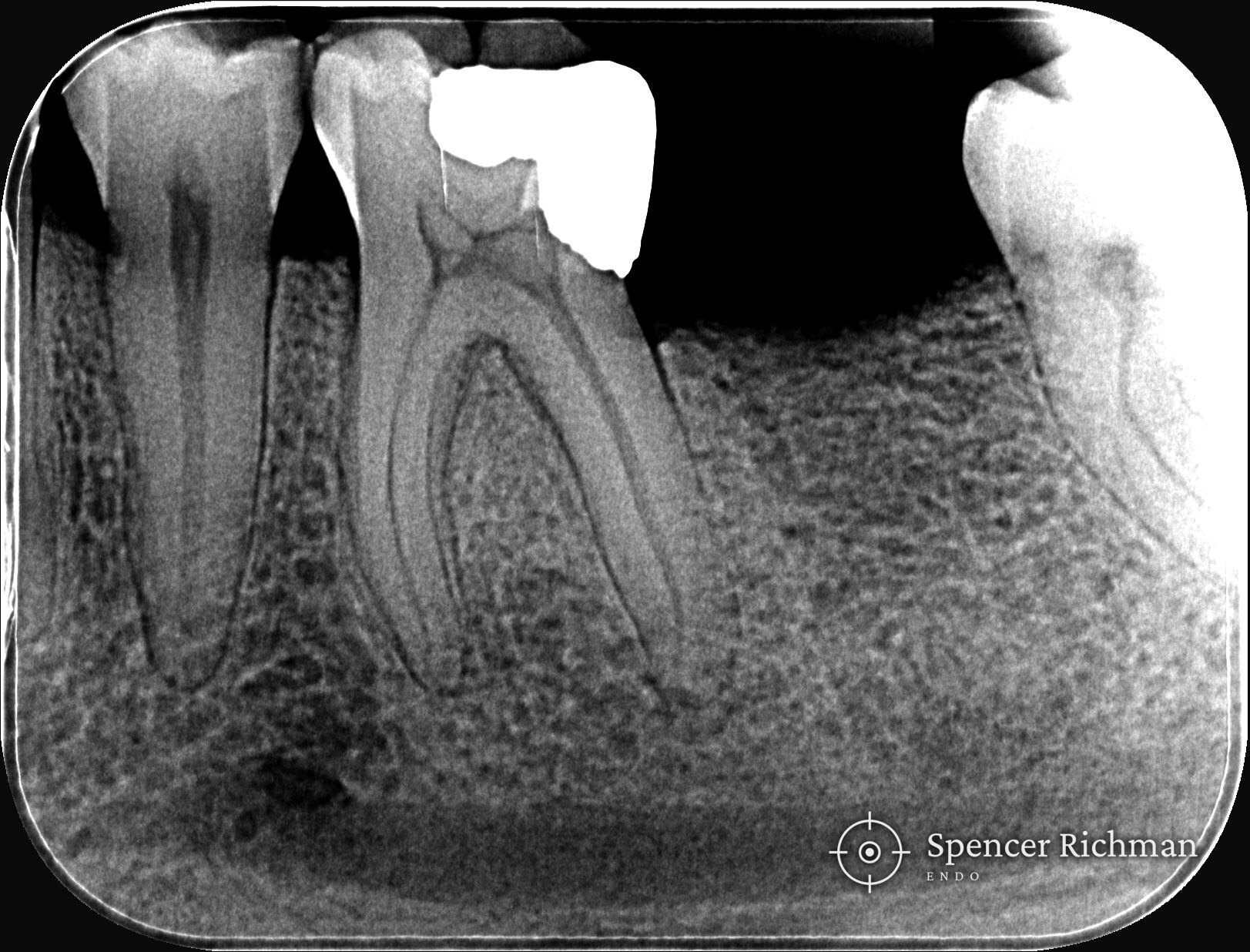
Before treatment
Treatment
Treatment was planned as a single visit, with Dr Adam White carrying out the restorative work at Sardinia House Dental Practice in Holborn.
Three hours in the chair asks a great deal of someone who is frightened. What made the appointment workable was dealing with her particular concern rather than a general one.
- Her worry was feeling something during treatment, so generous local anaesthetic, confirmed before anything began
- Frequent breaks to sit up and move around
- Her own music through headphones throughout
- Talking her through each stage in turn
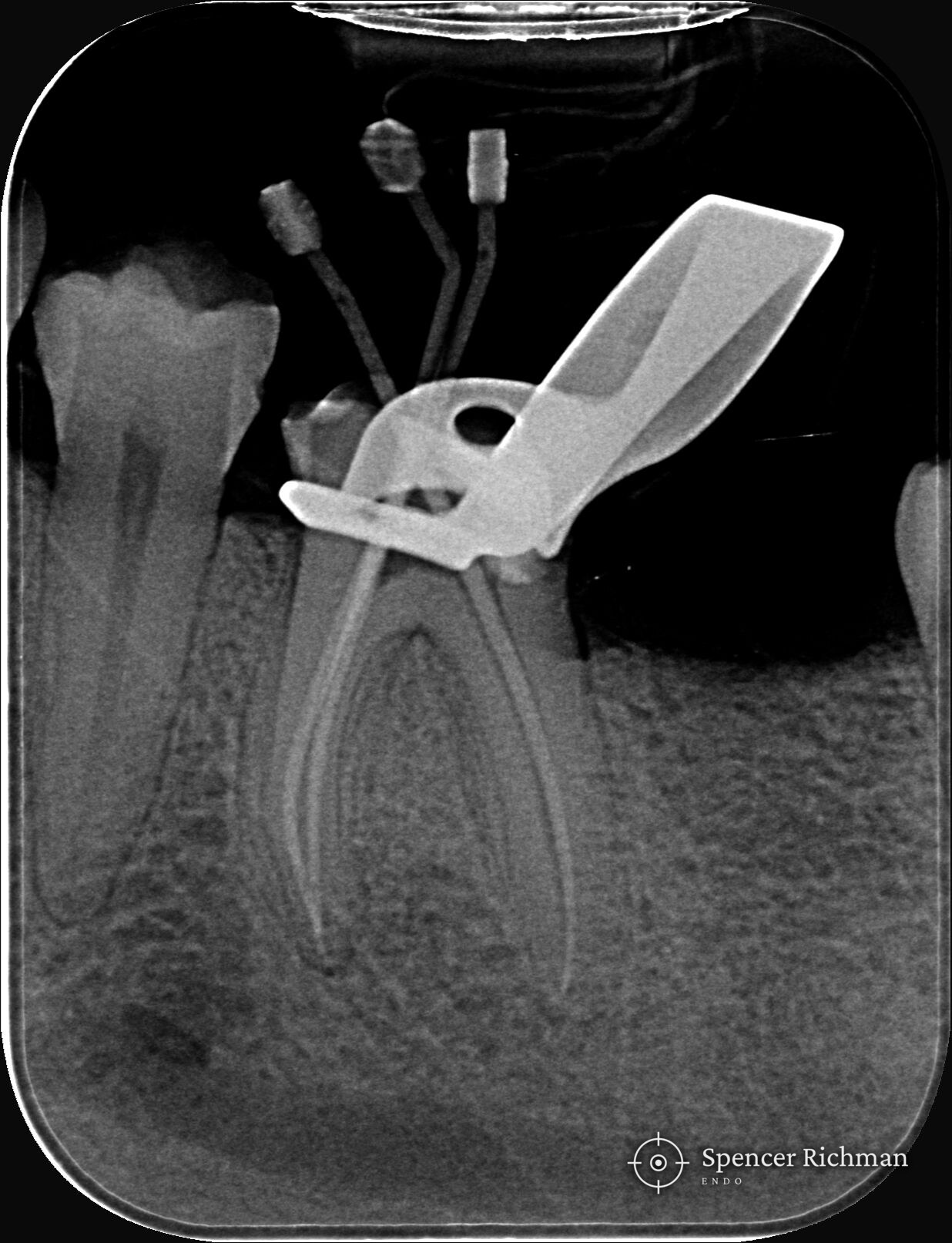
The molar held four canals, two in the mesial root and two in the distal. A second distal canal is present in a minority of lower first molars, and is easy to miss without magnification. The two distal canals joined before the apex, which is why three points were enough to confirm the working length across all four.
Shaping the canals makes room; the disinfection is what actually clears the infection. Once the canals were shaped, the irrigant was activated with a sonic tip so that the solution moved into the parts of the canal system no instrument reaches - the side branches and irregular spaces that make up a surprising amount of a molar’s anatomy.
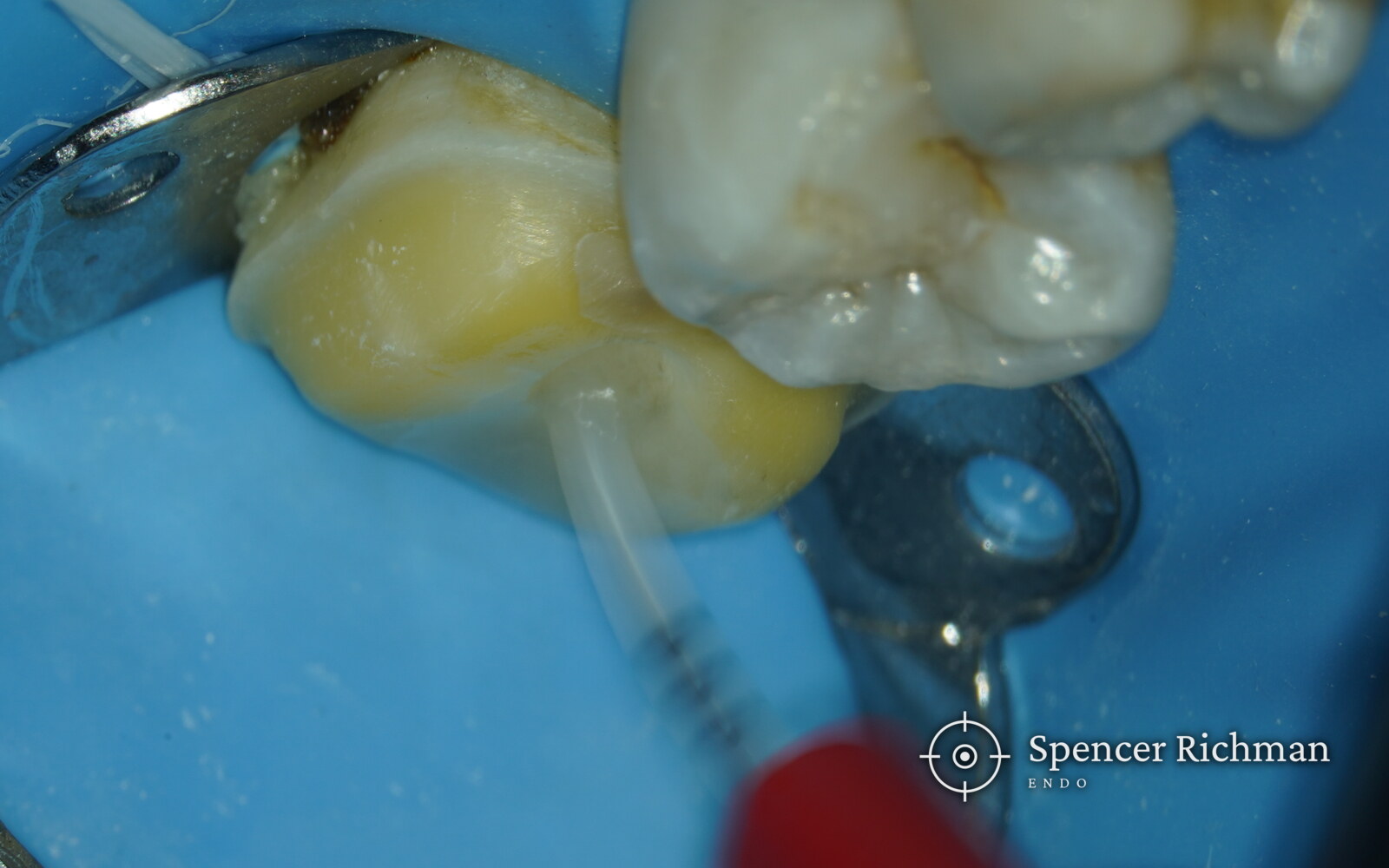
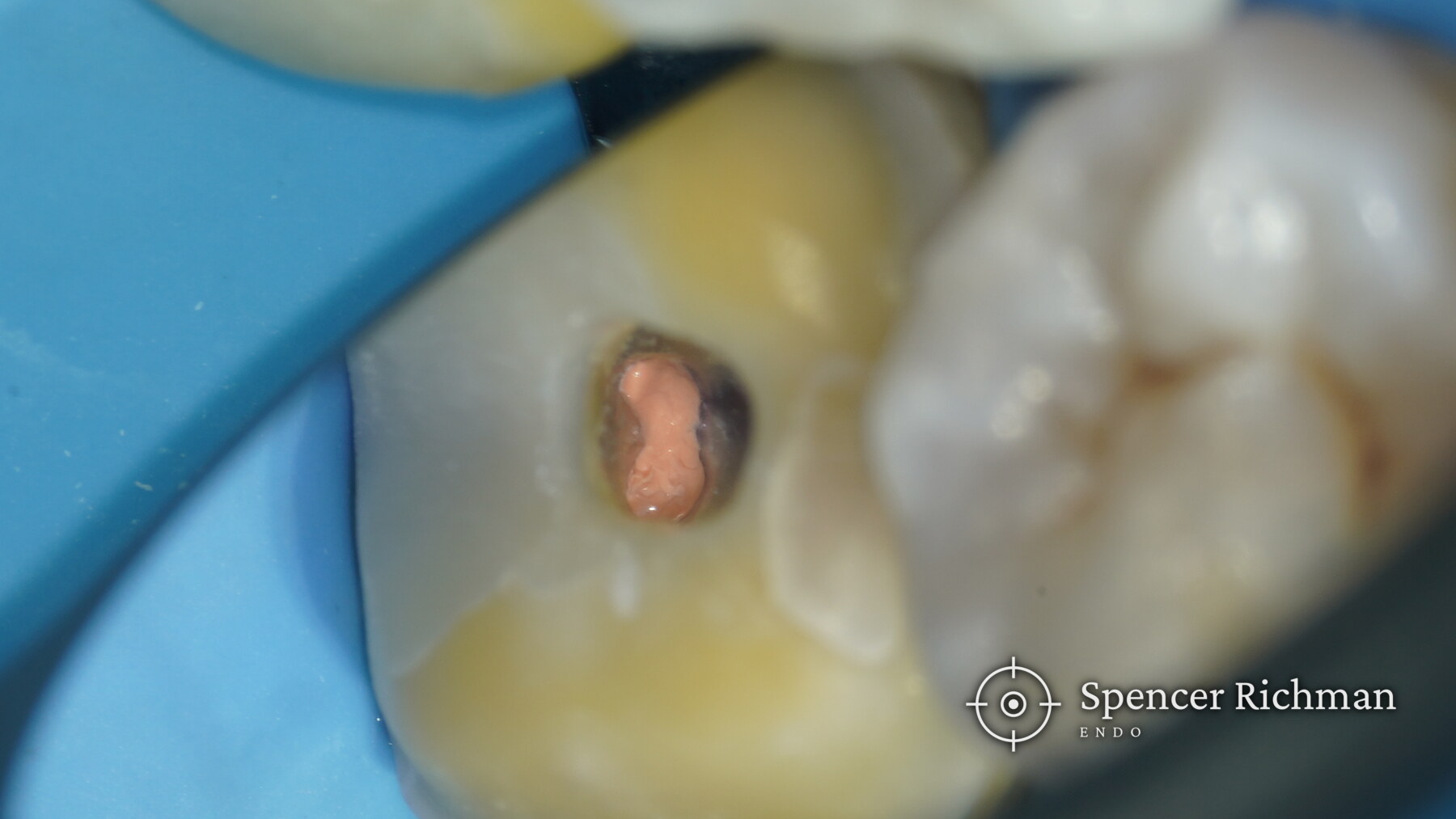
The old amalgam was dismantled, the tooth prepared, all four canals cleaned and sealed, and the crown fitted - a little over three hours from start to finish.
Three hours is a long appointment, but spreading the same work across separate visits takes longer overall. Each one repeats the anaesthetic, the rubber dam and the reopening of the tooth. Each one also means another journey to and from the practice.
For an anxious patient that counts twice over. One set of injections, one rubber dam, one lot of waiting beforehand, rather than the same again on each of several days.
Finishing in a single visit also means the canal system is sealed and the tooth restored at the same appointment. There is no stage where a temporary filling is the only thing keeping bacteria out of the canals.
A root-treated molar or premolar needs cuspal protection to stop the tooth breaking, which is why a crown rather than a large filling.
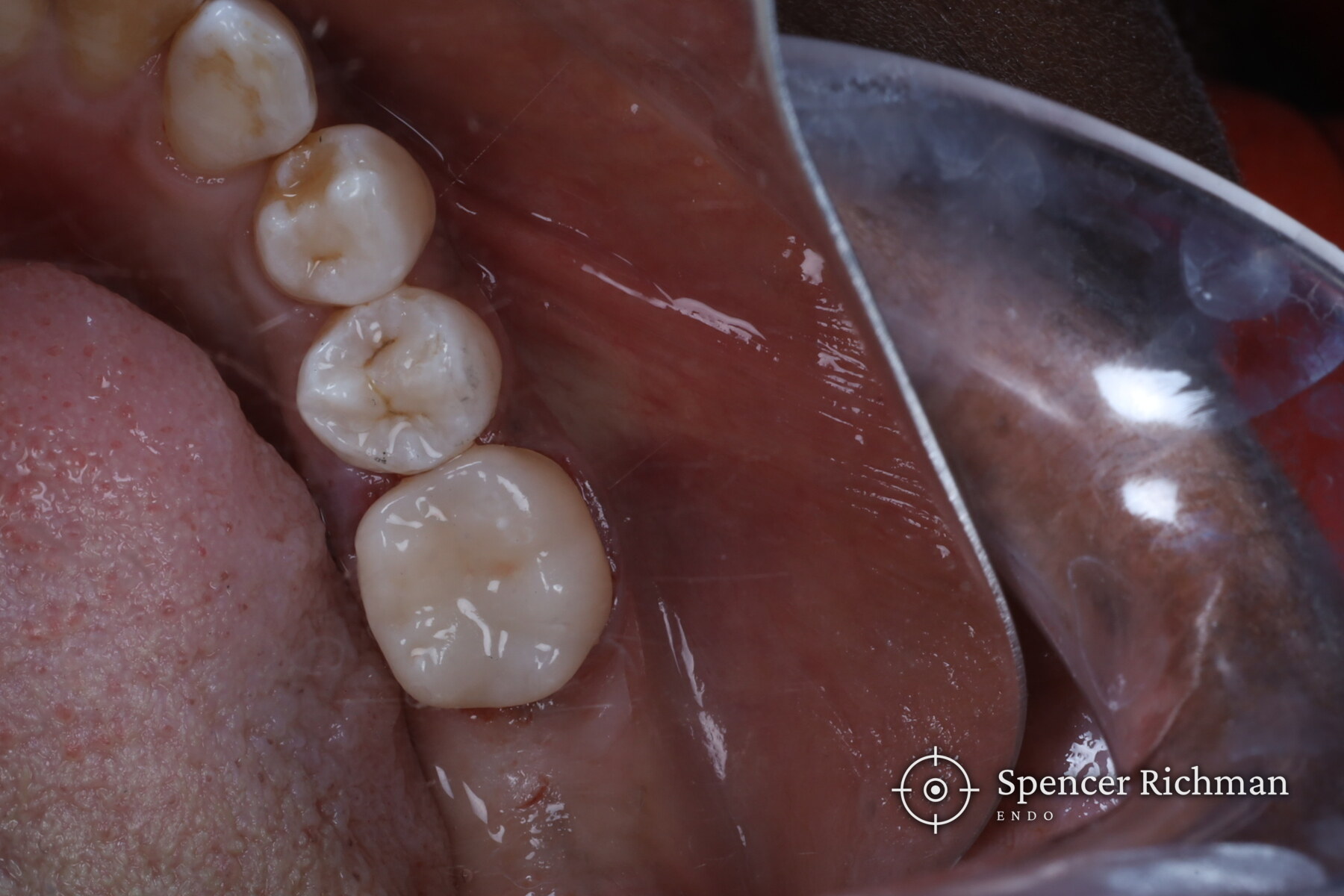
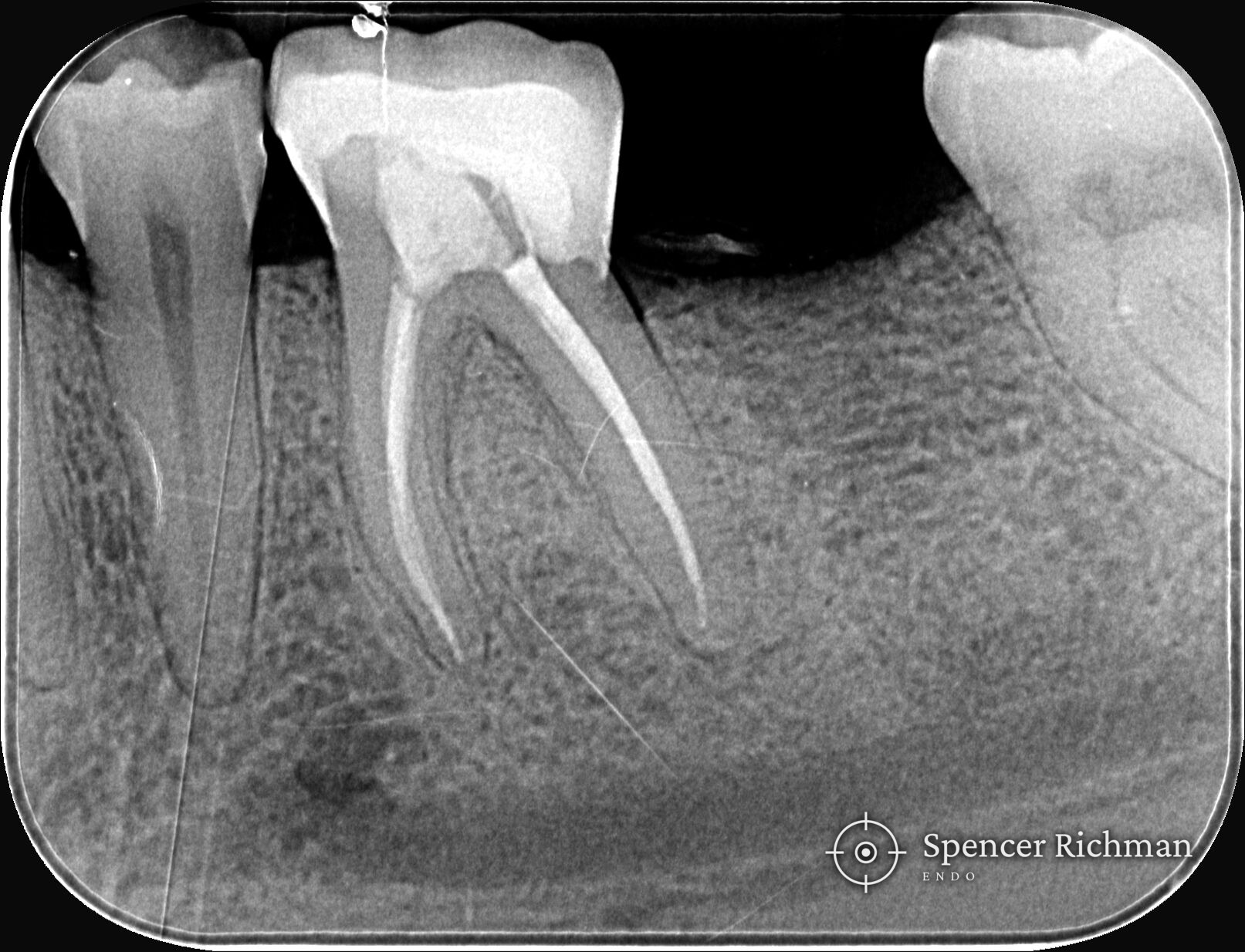
After treatment
Review
Questions patients ask
Can I have root canal treatment without sedation if I am anxious?
Many people can, and this patient did. What helps most is naming the particular worry rather than the general one. Hers was feeling something during treatment, so that is what we dealt with first. Breaks, music and knowing what is coming next do the rest.
Why does a tooth not respond to the cold test?
A cold test only reaches the outer part of the nerve. Where a tooth has carried a deep filling for years, that part is often insulated or has already died back, so the test produces nothing even though the tooth is causing trouble.
Why do I need a CBCT scan when the X-ray looks normal?
A flat X-ray shows a three-dimensional situation in one plane. Here the change around the root was a thickening of the bone rather than a loss of bone, which is far harder to see on a flat image.
Why does a root treated back tooth need a crown?
Back teeth take heavy biting loads, and a root-treated one has lost structure. A crown or onlay covers the cusps and holds the tooth together.
Published with the patient’s written consent and fully anonymised. Every tooth is different and outcomes vary from case to case, so this case should not be read as a promise of a particular result.
Get in touch