A lower molar: selective re-treatment of one root
A lower first molar, root filled more than twenty years earlier, aching and sore to bite on. The scan showed infection at one root only, so that root was re-treated and the other was left undisturbed.
Presentation
The patient was referred by Martin Whelan at Greenleaves Dental with pain on biting and an ache from a lower left first molar.
The tooth carried a root filling placed more than twenty years earlier.
Assessment
The symptoms and the X-rays fitted an acute exacerbation of chronic apical periodontitis: long-standing inflammation in the bone at the end of a root, recently flared up.
A CBCT scan was taken before treatment started, and the scan is what shaped the plan.
On the root nearer the front of the mouth (the mesial root), the existing root filling stopped short of the end of the root, with infection in the bone around the root end.
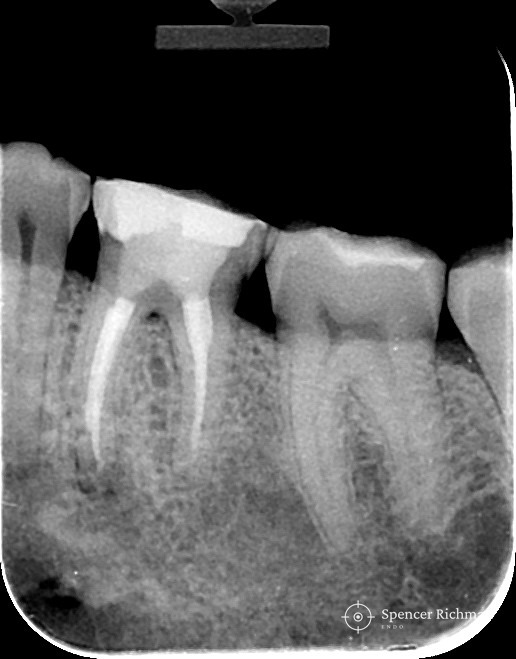
The root nearer the back of the mouth (the distal root) told a different story. Filled at the same appointment more than twenty years ago, that root was sound at the root end, with healthy bone around the root and no sign of infection.
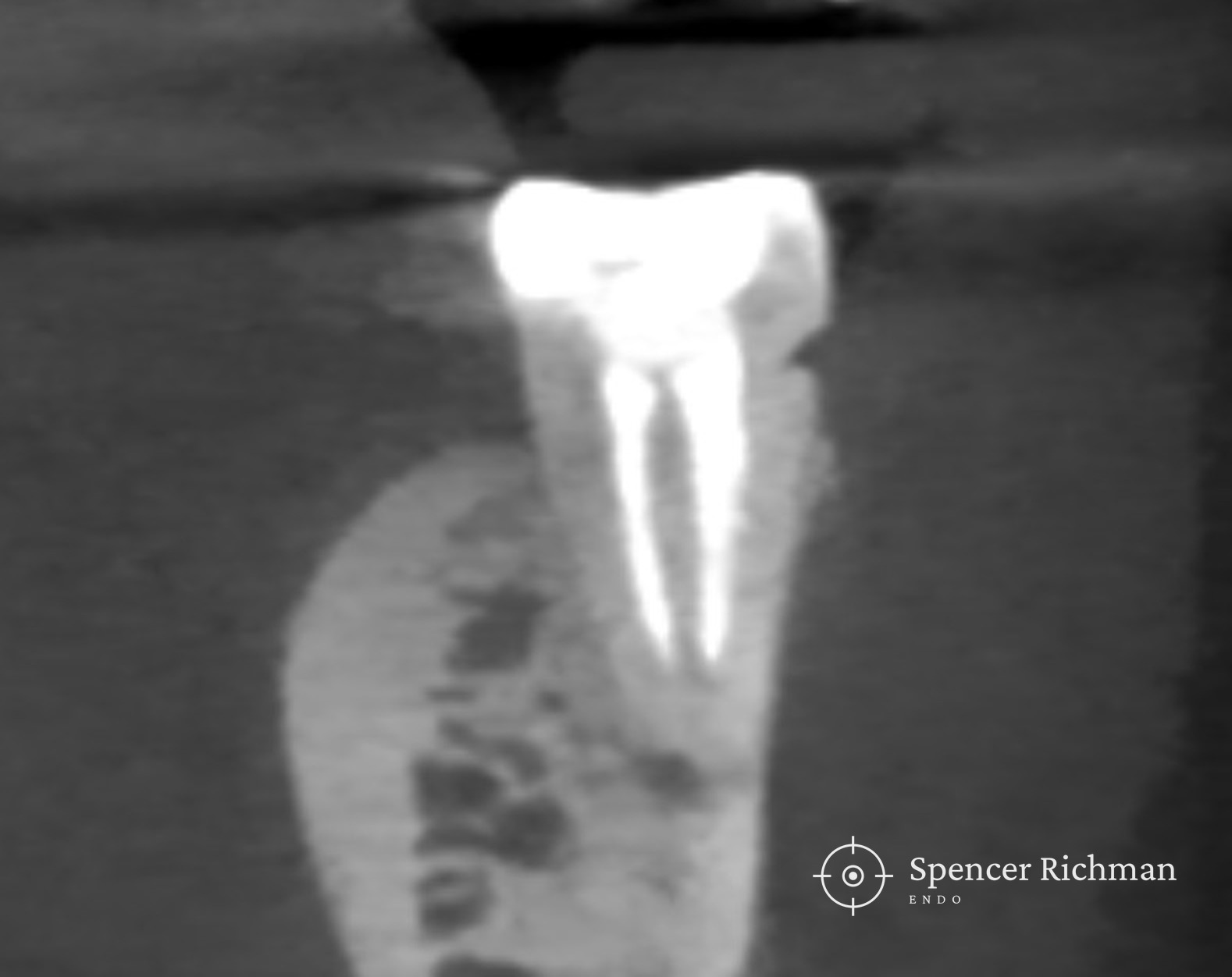
The CBCT slice through the mesial root: the existing root filling stopping short of the end of the root, with infection in the bone around the root end.
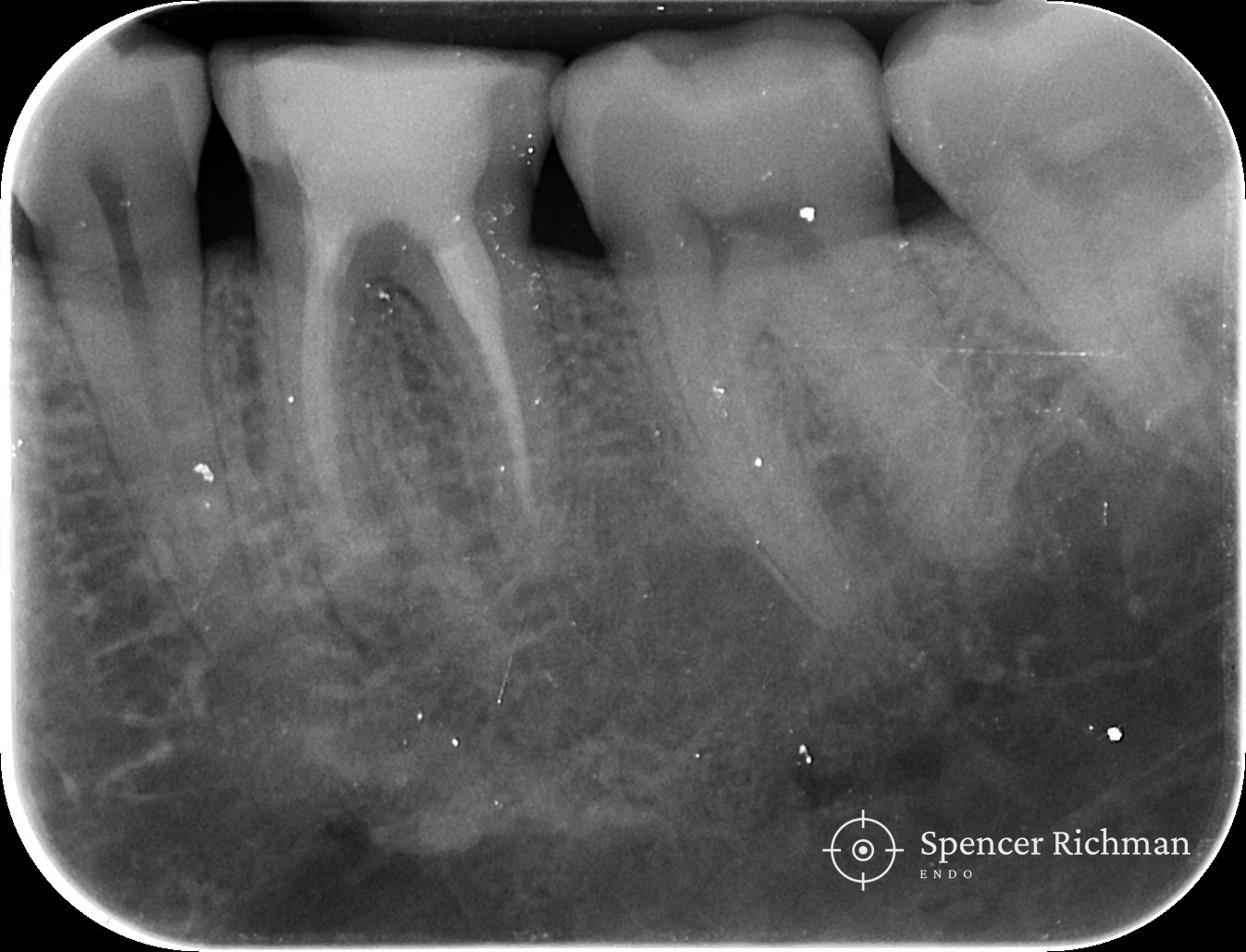
Before treatment
Treatment
Treatment was carried out at Greenleaves Dental in Potters Bar, under rubber dam and the dental operating microscope, and finished in a single visit.
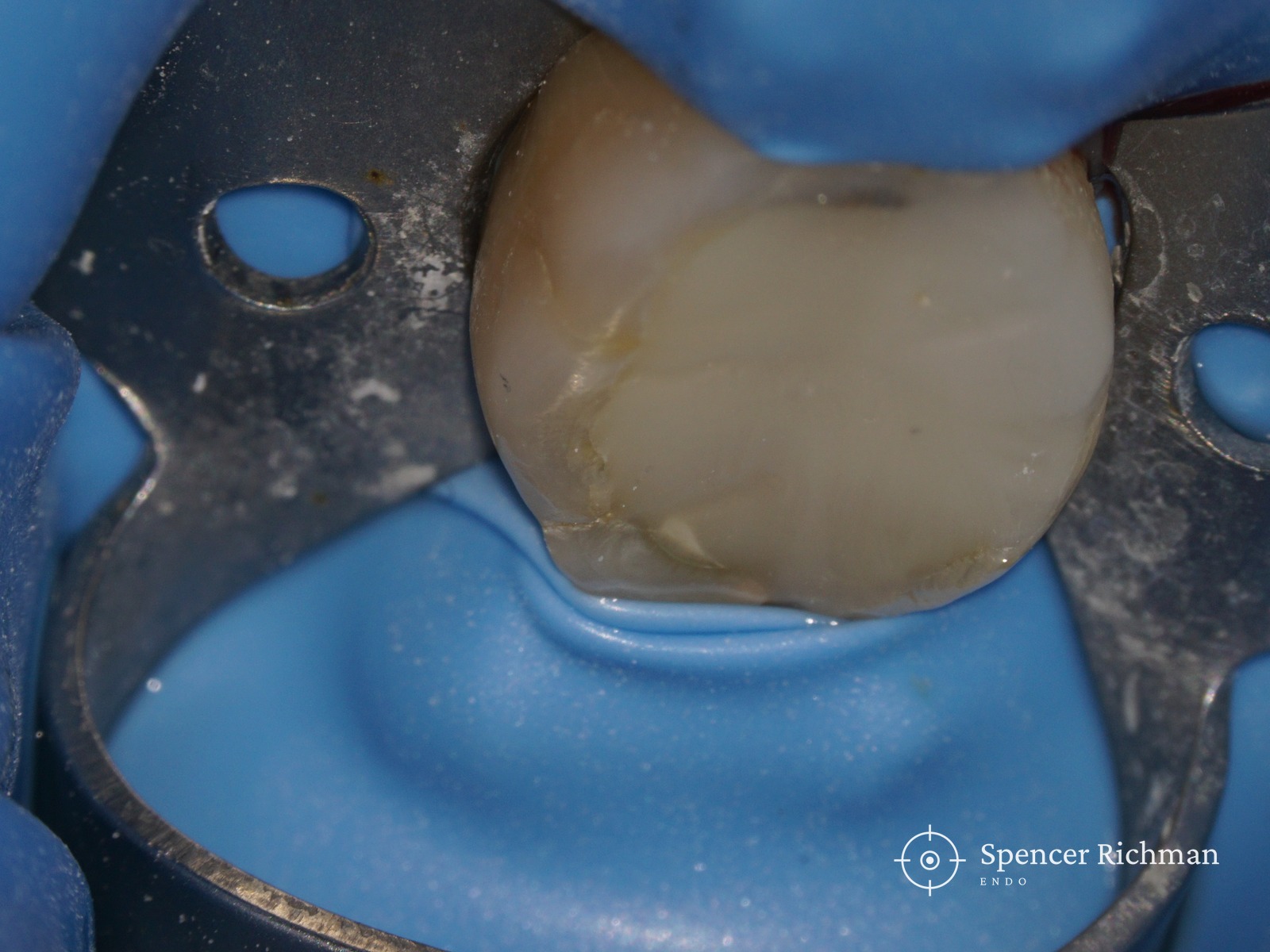
Only the mesial root was re-treated, an approach known as selective re-treatment. Re-treating a root filling that is doing the job asked of the filling means removing sound material and taking tooth structure along the way, so where the scan and the examination agree that a root is healthy, leaving that root alone is the more conservative answer. The plan was discussed and agreed with the patient before treatment began.
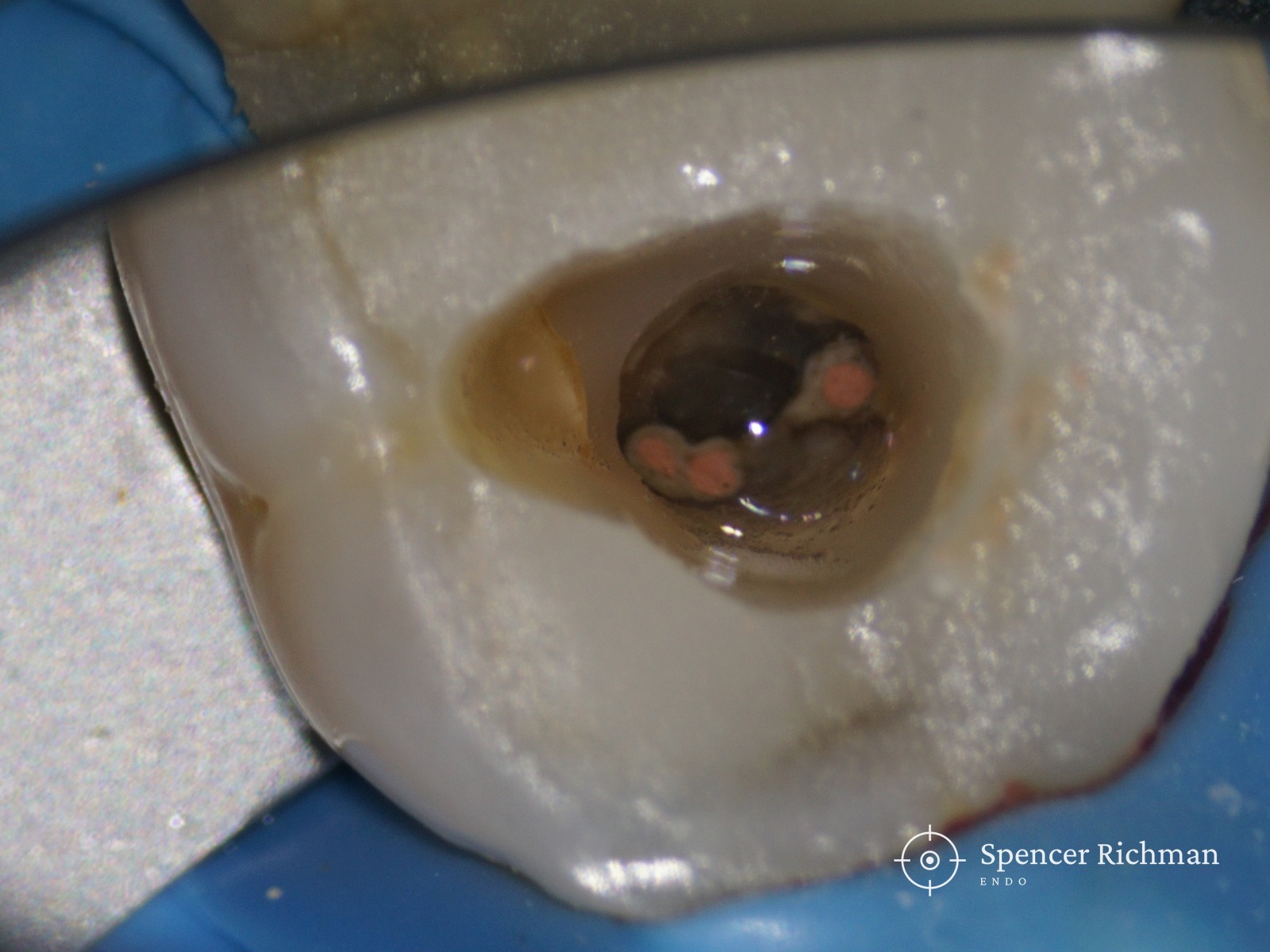
The old gutta-percha was removed from the mesial canals with Reciproc Blue R25, and the canals were shaped to their final size with WaveOne Gold. Disinfection followed the protocol I use in every case: Chloraxid 5.25% sodium hypochlorite, then 17% EDTA, then a final rinse of hypochlorite, delivered through TruNatomy irrigation tips and activated with a SmartLite Pro EndoActivator. In an infected tooth the volume of hypochlorite goes up.
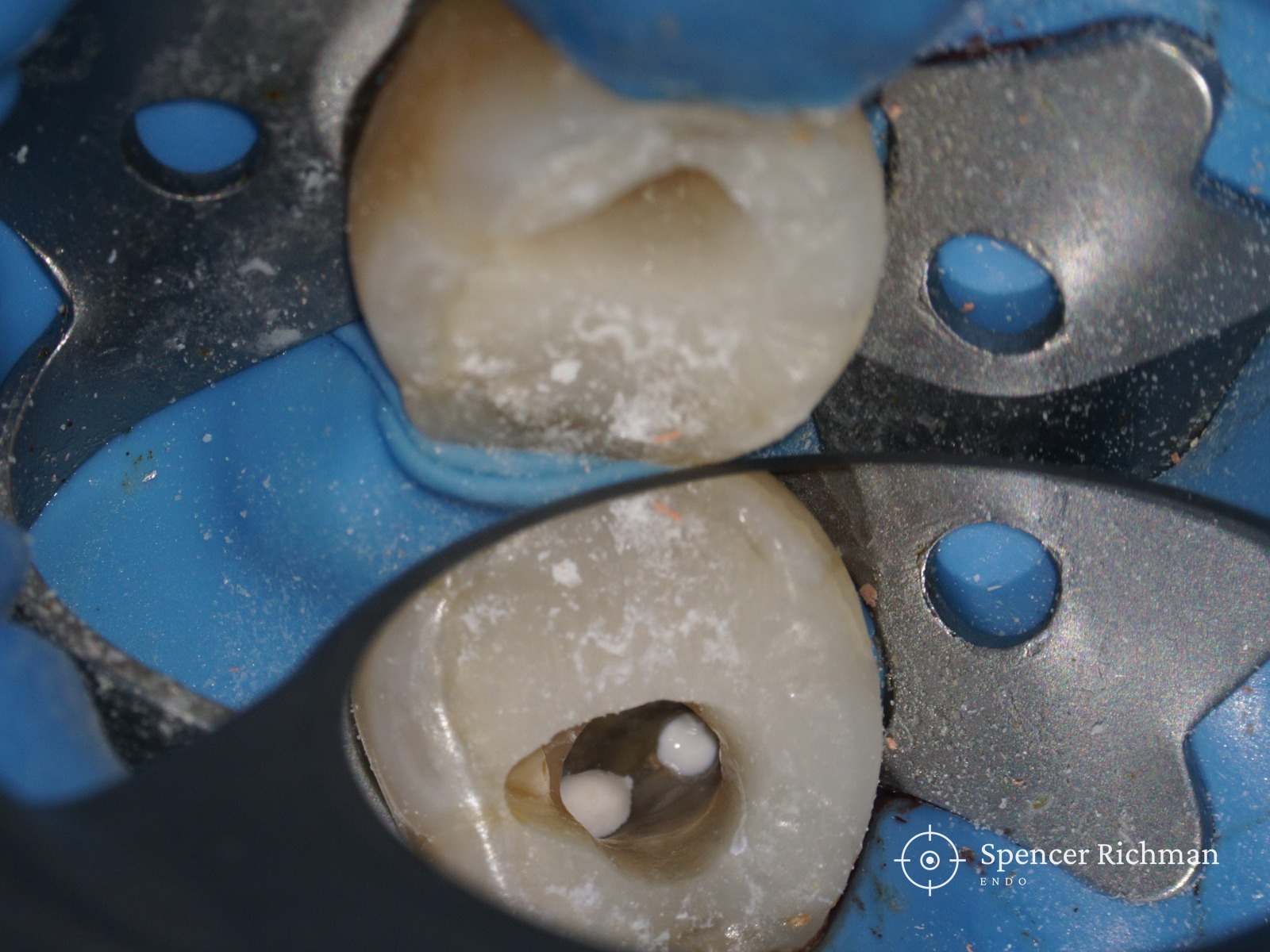

The mesial canals were filled with gutta-percha and TotalFill bioceramic sealer. The distal root filling was left undisturbed.
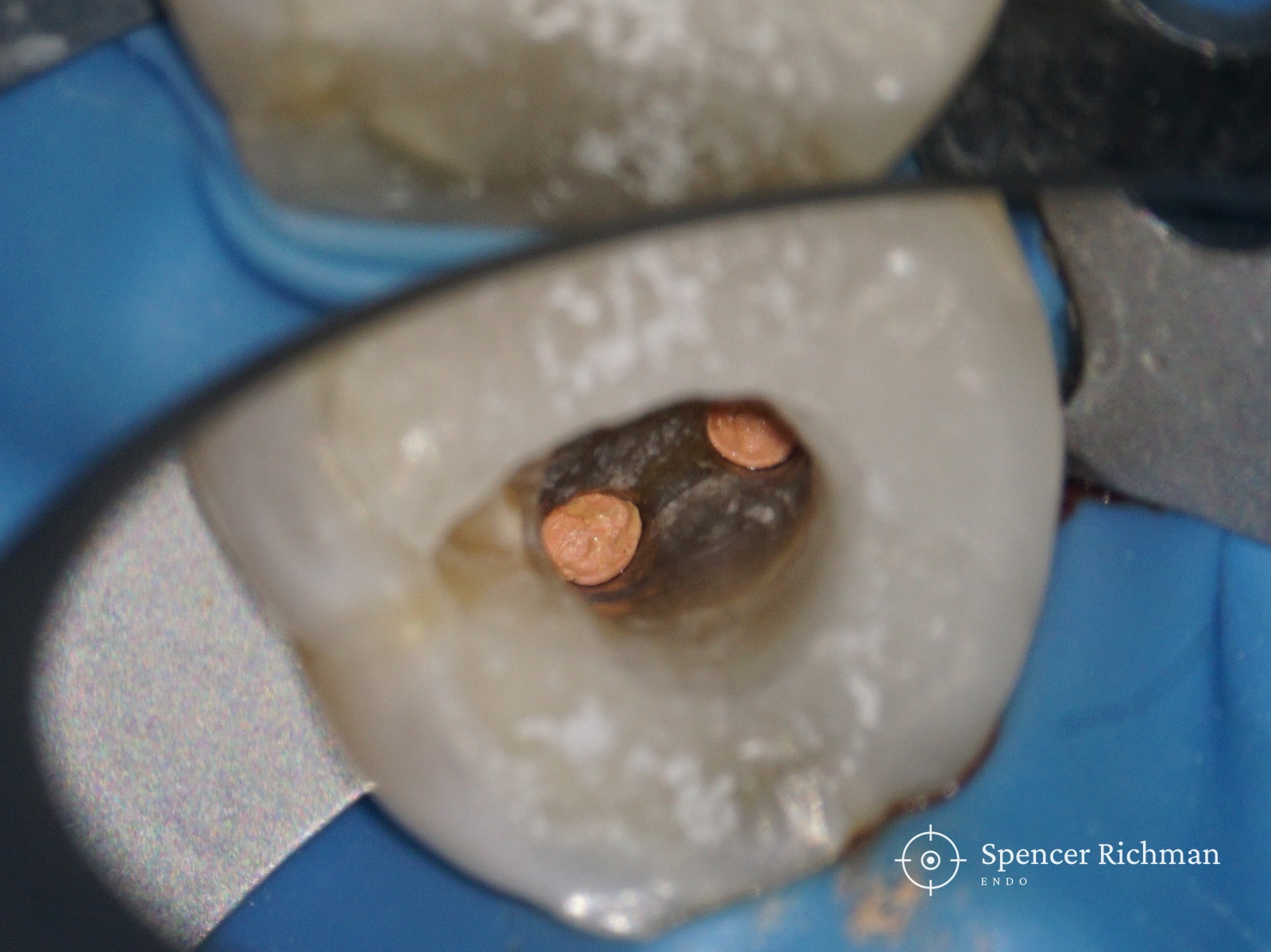
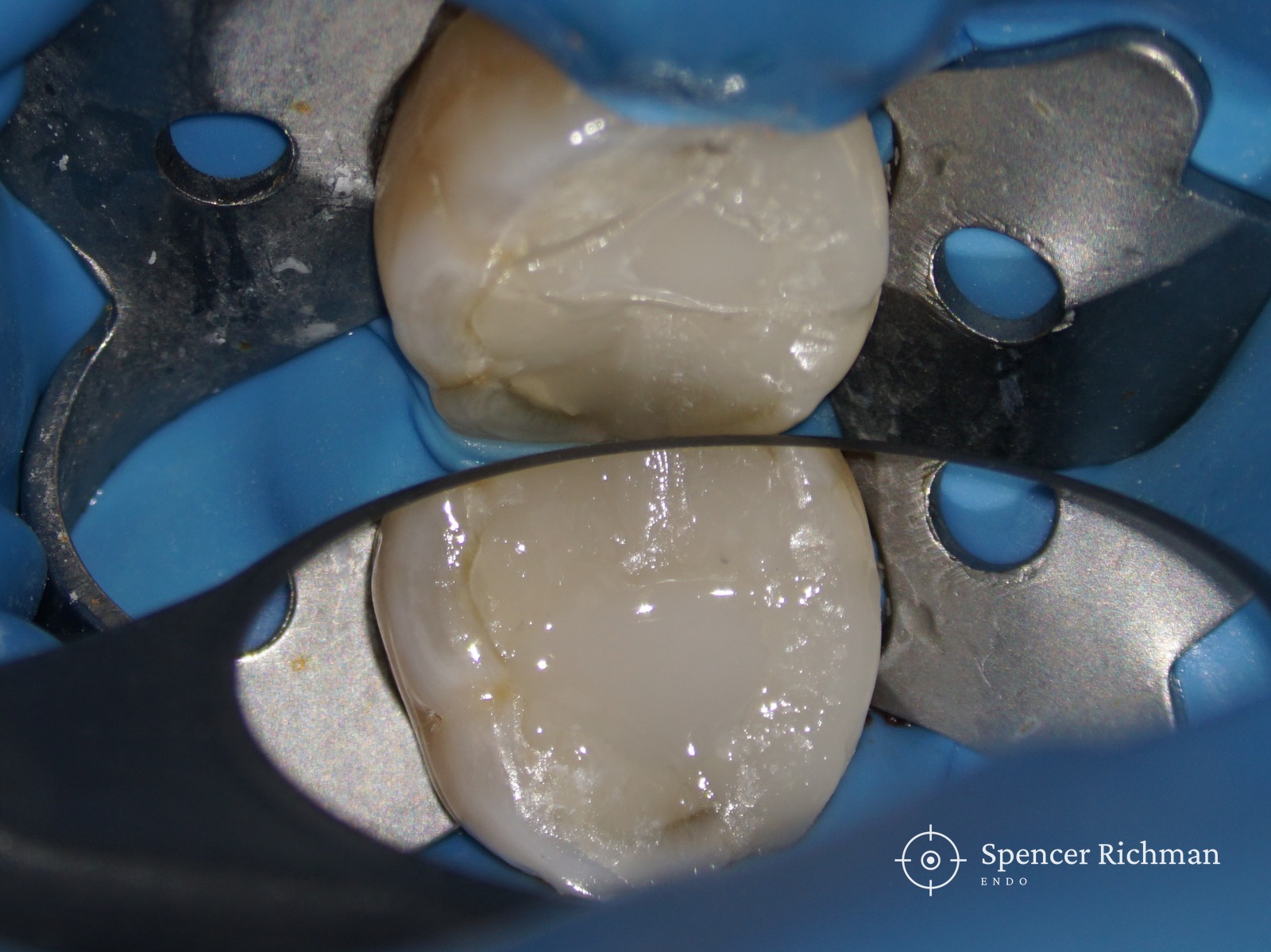
Composite was placed over the gutta-percha to seal the tooth at the same appointment.
After treatment
Review
6-month review
Review at six months.
Questions patients ask
What is selective re-treatment?
Selective re-treatment means re-treating the root that needs treating and leaving the root that does not. On a tooth with more than one root, the roots can be in very different condition, and a scan shows the bone around each root separately.
Why was only one root re-treated?
The scan showed infection around one root and healthy bone around the other. Re-treating a root filling that is sound means removing material that is doing a job and taking tooth structure with that material, so the healthy root was left alone.
Does a root filling need redoing because of age?
No. Age on its own is not a reason to re-treat. What matters is whether the tooth is comfortable and whether the bone around each root is healthy.
Was all of this done in one appointment?
Yes — removing the old filling material from the affected root, cleaning and disinfecting those canals, filling the canals and sealing the tooth, in a single visit.
Published with the patient’s written consent and fully anonymised. Every tooth is different and outcomes vary from case to case, so this case should not be read as a promise of a particular result.
Get in touch Doctify profile