A lower molar in a young patient: root canal re-treatment four years on
A woman in her early twenties with an aching lower right second molar, root treated four years earlier. The X-ray showed the filling stopping short of both roots, with spaces running through the filling. Re-treated in a single visit.
Presentation
A woman in her early twenties came to Greenleaves Dental in Potters Bar with an ache from her lower right second molar.
She was already a patient of the practice. Dr Martin Whelan, the principal, referred her to me.
The tooth had been root treated about four years earlier.
Assessment
The X-ray showed the root filling stopping short of the end of both roots, with spaces within the filling material itself. Above the filling, the composite restoration carried several pins and spaces of its own.
Space inside a tooth is space bacteria can occupy. A void left in the root filling, or in the restoration sealing the tooth above, gives any bacteria still present room to multiply, and the infection that follows is what eventually shows as a change in the bone around the root.
A CBCT scan, taken several weeks before the treatment appointment, confirmed the picture: changes in the bone at the end of both roots, and the voids running through the previous root filling.

Diagnosis: symptomatic chronic apical periodontitis in a previously endodontically treated tooth.
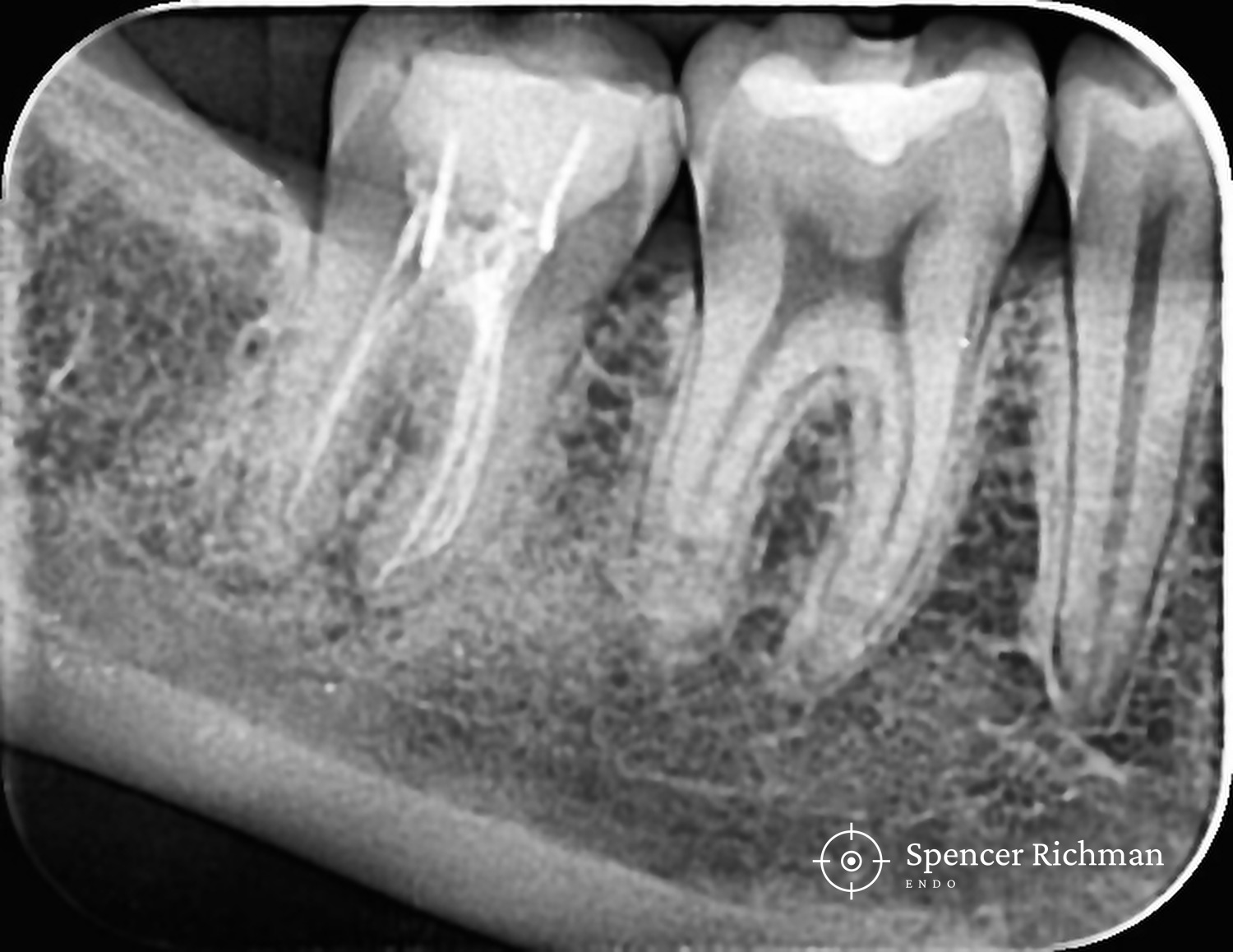
The tooth at presentation: the root filling short of the end of both roots, with spaces in the filling and in the restoration above.
Before treatment
Treatment
The tooth was re-treated in a single appointment, under rubber dam and the dental operating microscope.
- The previous root filling material was removed under magnification
- Each canal was cleaned along its full length, including the portion the first treatment had not reached
- Both roots were filled to the end at the same visit
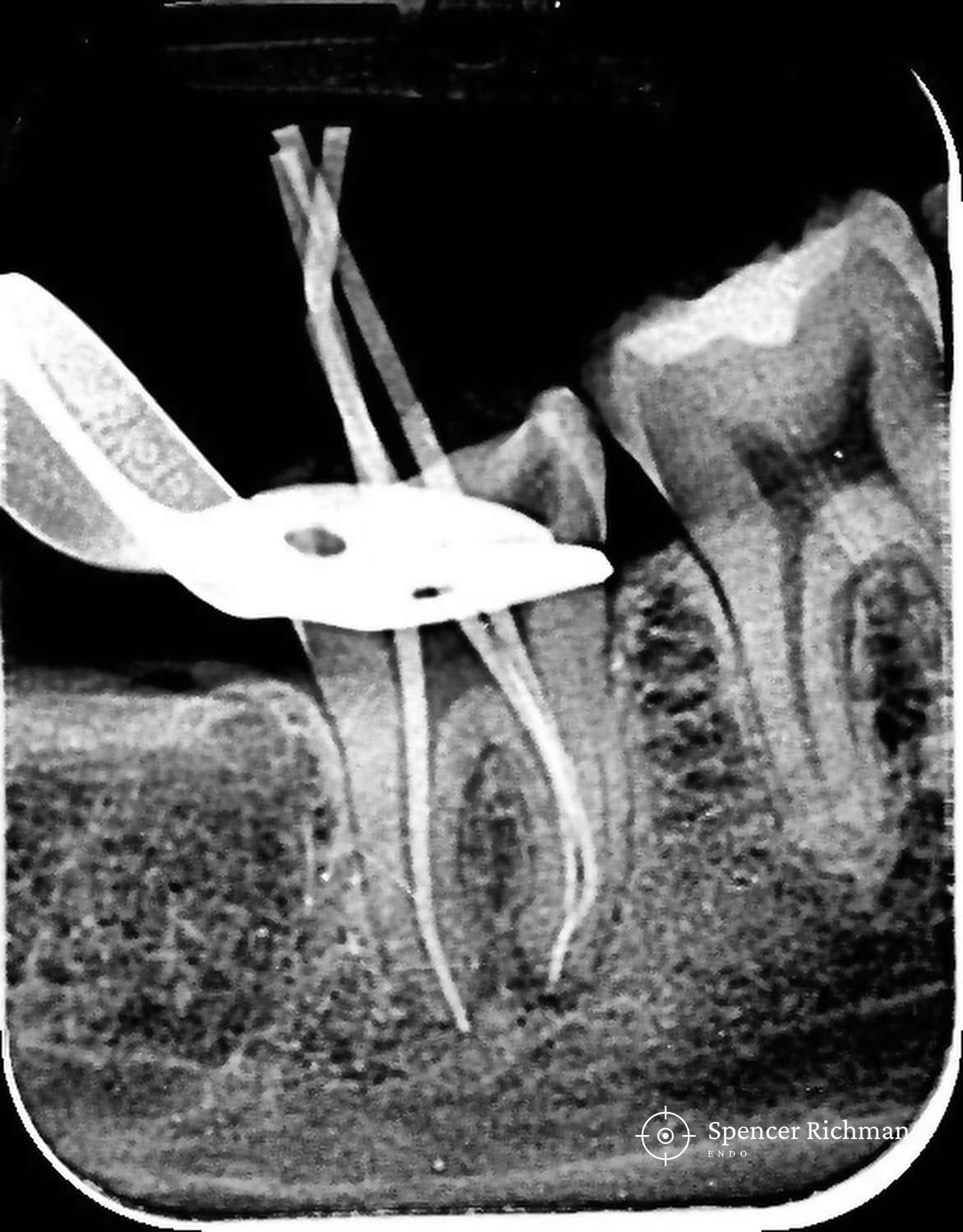
The canals were re-shaped with Reciproc Blue R25. Disinfection followed the protocol I use in every case: Chloraxid 5.25% sodium hypochlorite, then 17% EDTA, then a final rinse of hypochlorite, delivered through TruNatomy irrigation tips and activated with a SmartLite Pro EndoActivator. The canals were then filled with gutta-percha and TotalFill bioceramic sealer.
The tooth was rebuilt with SDR composite at the same visit, and she was returned to Dr Whelan for a definitive crown.
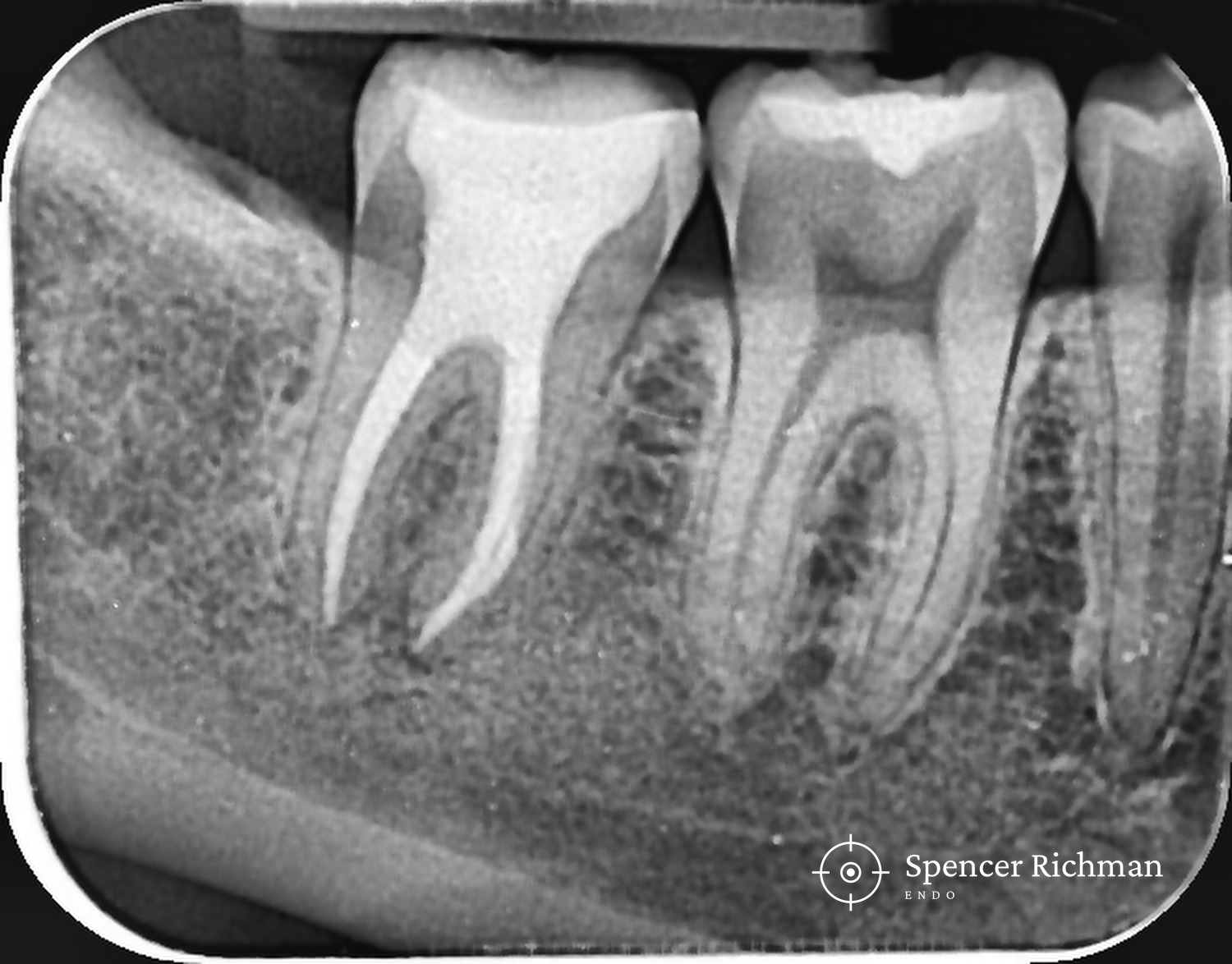
After treatment
Review
Awaiting 1-year review
I have not reviewed the tooth yet. My usual review for a tooth re-treated this way is at a year.
Questions patients ask
What is a void in a root filling, and does a void matter?
A void is a space left inside the canal where filling material should be. Space matters because any bacteria remaining after the first treatment have somewhere to sit and multiply, out of reach of the body’s defences.
Why would a tooth treated four years ago start aching now?
A root filling that leaves part of the canal uncleaned can stay quiet for years. Bacteria inside carry on affecting the bone around the root, often with no symptoms at all, and discomfort appears only once that balance shifts.
Why does a re-treated back tooth need a crown?
Back teeth take heavy biting loads, and a tooth that has been opened up twice has lost structure both times. A crown covers the cusps and holds the remaining tooth together.
Can bone at the end of a root grow back?
Often, yes. Once the source of the infection inside the root is dealt with, the bone around the root end can fill back in, though the process takes months rather than weeks, which is why review is at a year.
Published with the patient’s written consent and fully anonymised. Every tooth is different and outcomes vary from case to case, so this case should not be read as a promise of a particular result.
Get in touch Doctify profile