Deep decay in a lower molar: root canal treatment in a single visit
Decay reaching the nerve of a lower first molar in a young patient, with infection at the end of both roots by the time treatment began. Completed in a single visit.
Presentation
A new patient to the practice, in his 20s, who attended a colleague as an emergency with toothache from the lower right side.
The discomfort was throbbing and intense. Hot drinks made the discomfort worse, and the sensitivity lasted several minutes afterwards. He had been taking regular pain relief to manage the symptoms.
A temporary filling was placed at that first visit, and he was asked to see me.
Assessment
A bitewing X-ray taken at that first visit confirmed decay in the lower right first molar. The decay extended through the enamel and dentine and reached the pulp.
Lingering sensitivity to heat, lasting several minutes, points to a nerve inflamed beyond recovery. The tooth was dressed to settle the symptoms.
Several weeks then passed before the patient returned for treatment. A periapical X-ray taken at that stage showed infection at the end of both roots.
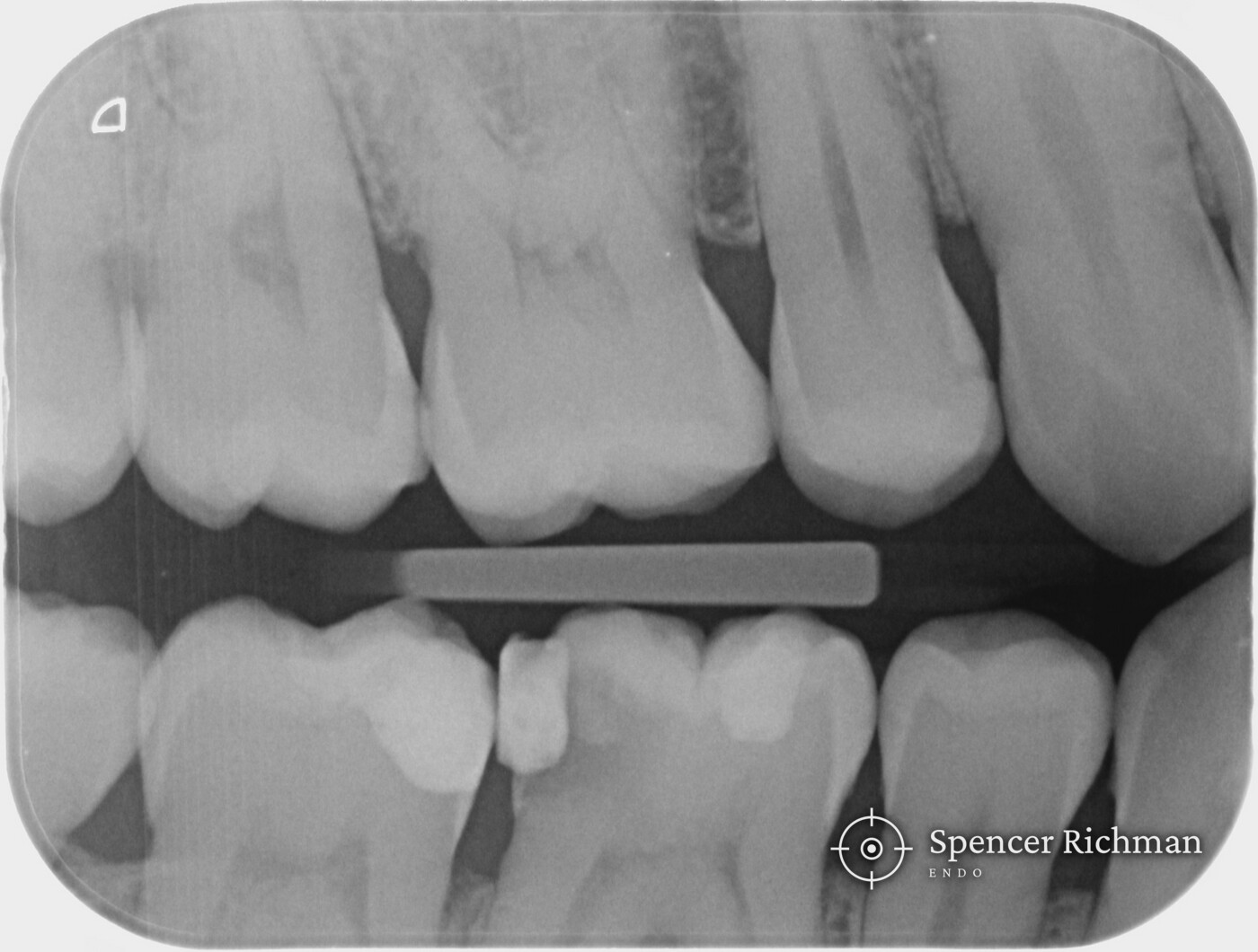
Bitewing X-ray at the first visit: decay in the lower right first molar reaching the pulp.

Before treatment
Treatment
Root canal treatment was completed in a single appointment, under rubber dam and the dental operating microscope.
- The decay was removed and both root canals were cleaned and disinfected along their full length
- A temporary restoration was placed over the access
With the endodontic treatment complete and sealed, he was returned to his referring dentist for the definitive restoration.

After treatment
Review
Questions patients ask
Why does deep decay need a root canal rather than a filling?
The decay had already reached the nerve inside the tooth. Once bacteria are inside the pulp, that tissue cannot recover on its own. A filling placed over the top leaves the affected tissue in place.
What does an infection at the root of a tooth mean?
Infection at the root end describes a change in the bone around the root tip, visible on an X-ray. That change develops when bacteria from inside the tooth reach the tissues around the root.
What happens if you delay root canal treatment?
Waiting can make a difference. Symptoms often settle once a dressing is placed, which is reassuring. The bacteria inside the tooth carry on affecting the surrounding tissues in the meantime.
Published with the patient’s written consent and fully anonymised. Every tooth is different and outcomes vary from case to case, so this case should not be read as a promise of a particular result.
Get in touch