Compromised lower molar: root canal treatment to keep a strategically important tooth
A cracked lower second molar with external resorption, in a man in his late eighties. That molar carried most of his chewing, and he wanted to keep the tooth.
Presentation
A heavily compromised lower right second molar brought him to us. In his late eighties, that molar was where he did most of his chewing.
What he wanted was clear. He wanted to keep the tooth, for as long as the tooth could reasonably be kept.
Assessment
The tooth was cracked, and a CBCT scan confirmed external inflammatory resorption. Together those findings make the long-term outlook uncertain.
That uncertainty was discussed openly before anything was started. A tooth in this condition carries no guarantees, and the alternative was to lose the tooth.
Strategically the molar mattered more than its prognosis suggested. Losing the molar would have taken away the side he chews on.
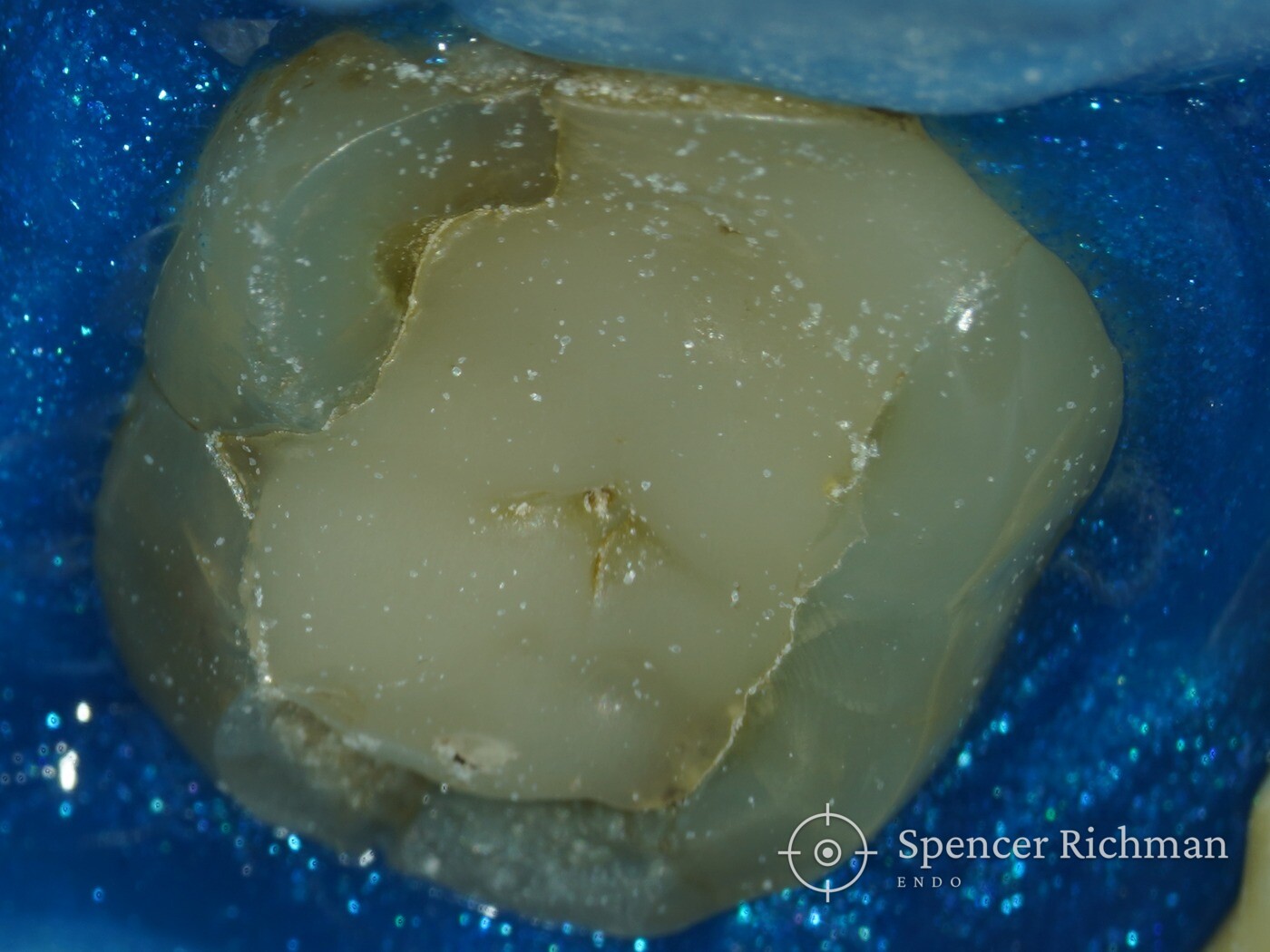
The tooth isolated under rubber dam at the start of treatment.
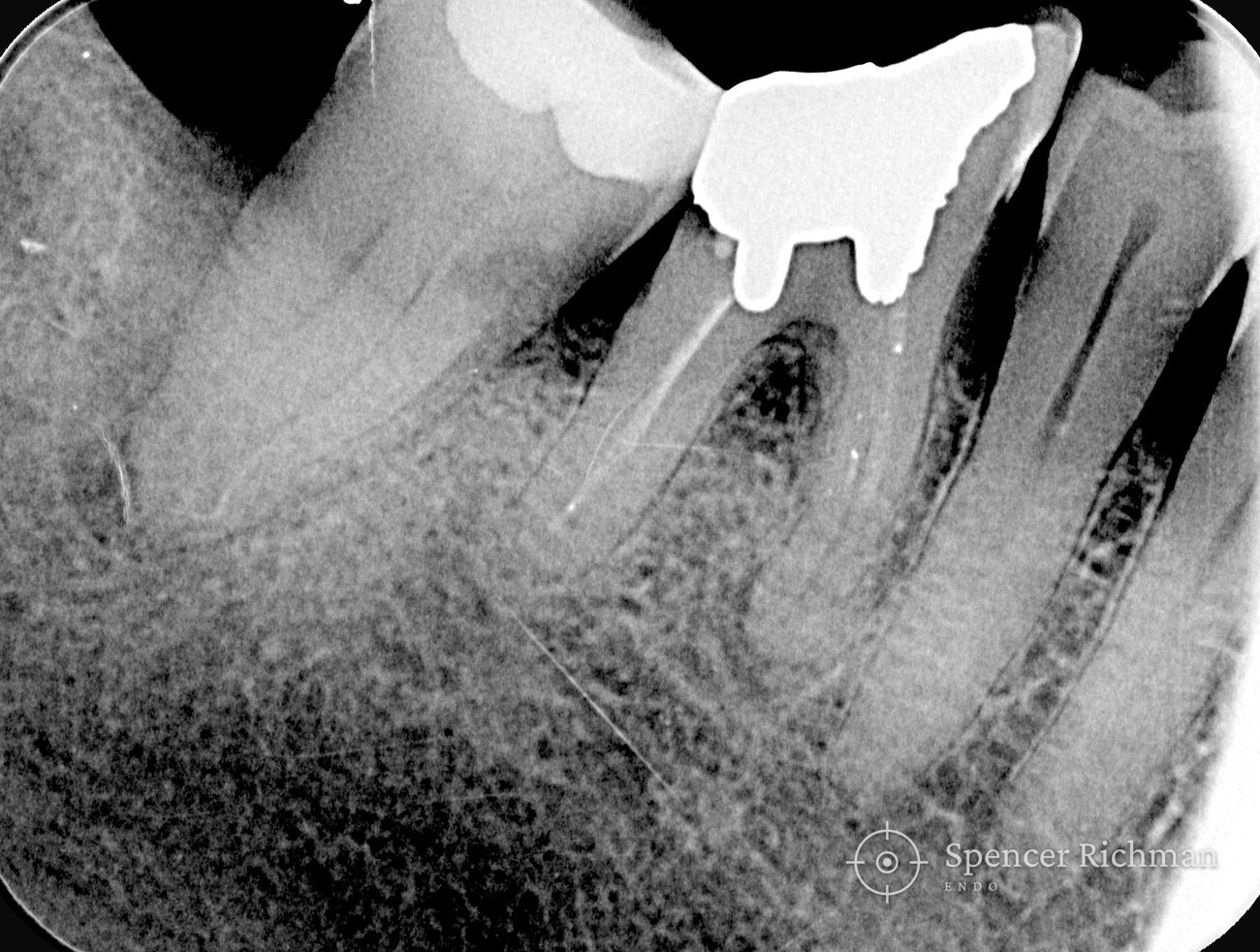
Before treatment
Treatment
The tooth was root treated under the dental operating microscope at Sardinia House Dental Practice in Holborn.

A restorative colleague is crowning the tooth shortly, so the molar is protected and back in function.
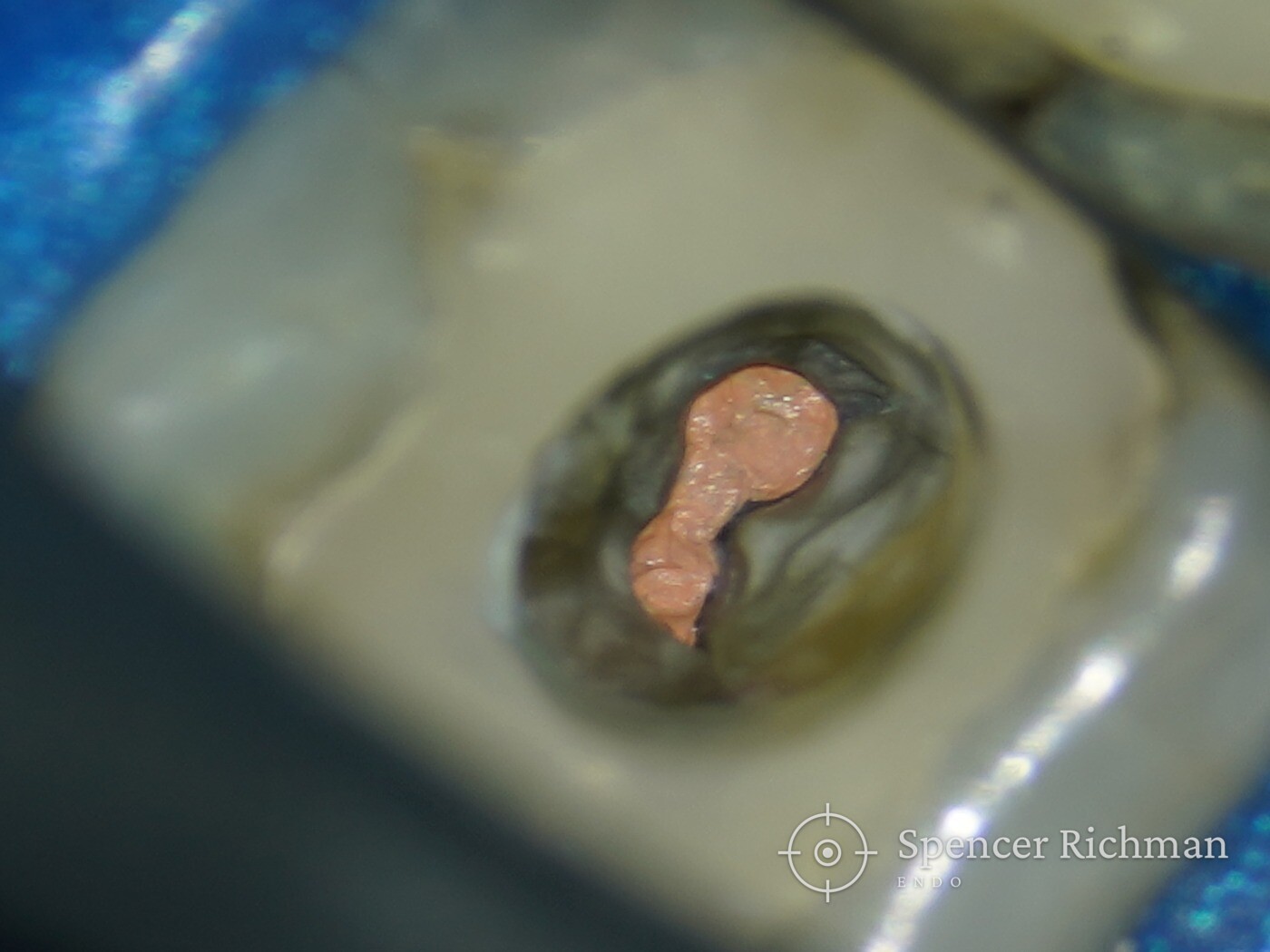
The aim was never a perfect prognosis. The aim was to give a compromised but important tooth a fair chance of staying useful.
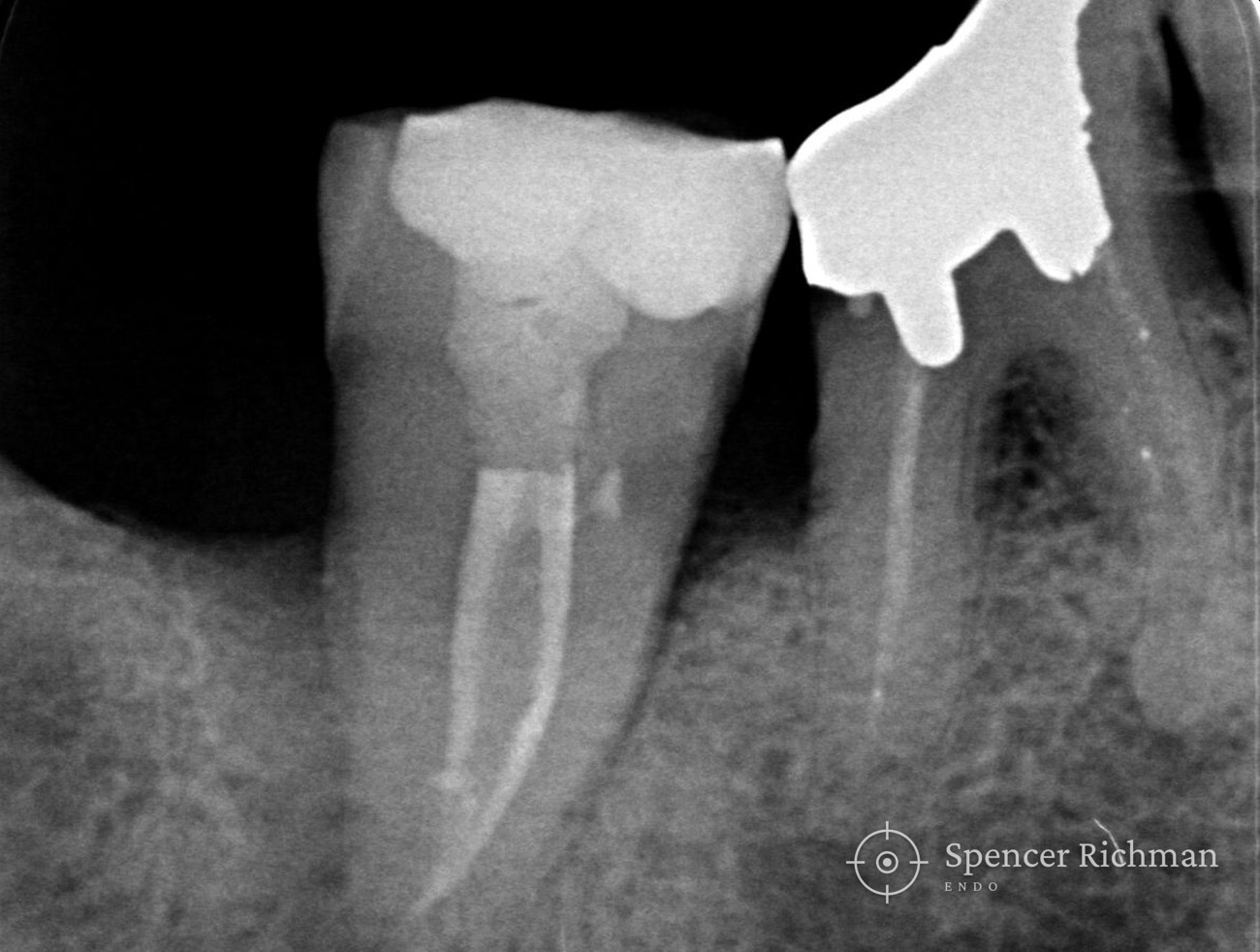
After treatment
Review
Questions patients ask
Is a badly damaged tooth worth saving?
Sometimes, yes. Where a tooth is carrying most of the chewing, keeping that tooth can matter more than its textbook prognosis.
What is tooth resorption?
Resorption is a process where the body’s own cells break down tooth structure. Where resorption is external and inflammatory, the process can progress.
Am I too old for root canal treatment?
Age changes what matters most. Keeping a working tooth for the years ahead can be a more useful goal than ideal long-term statistics.
Published with the patient’s written consent and fully anonymised. Every tooth is different and outcomes vary from case to case, so this case should not be read as a promise of a particular result.
Get in touch