What is a rubber dam?
A rubber dam is a thin, flexible sheet used to isolate teeth during treatment. Sometimes only the tooth being treated is isolated, and sometimes the neighbouring teeth are isolated as well. Every root canal treatment I carry out is done under rubber dam. Here is what the dam is for, and what having one fitted is like.
Most people meet a rubber dam for the first time in the dental chair, and the name gives little away. The dam is simple, quick to place and, for most patients, makes treatment more comfortable rather than less.
The short answer
A rubber dam is a square of thin sheet, punched with a hole for each tooth to be isolated, held in place by a clip and stretched over a light frame. The dam keeps saliva and bacteria away from the inside of the tooth, keeps the disinfecting solutions and small instruments out of your mouth, and gives a clear, dry view of the tooth for the whole appointment.
What a rubber dam is
The dam itself is a square of thin, stretchy sheet, and the dam I use is always latex-free. A hole is punched for each tooth to be isolated, and the sheet is eased over those teeth so that the isolated teeth stand above the sheet. Sometimes only the tooth being treated is isolated, and sometimes the neighbouring teeth are isolated as well, depending on the tooth and how the dam seals best.
A small metal clip, called a clamp, holds the sheet in place, and a light frame outside the mouth keeps the sheet taut. Your lips, tongue and cheeks stay underneath, out of the way.
The dam goes on once the tooth is numb, and takes a minute or two to place. Placing the dam is one of the first steps of the appointment, set out in what happens during root canal treatment.
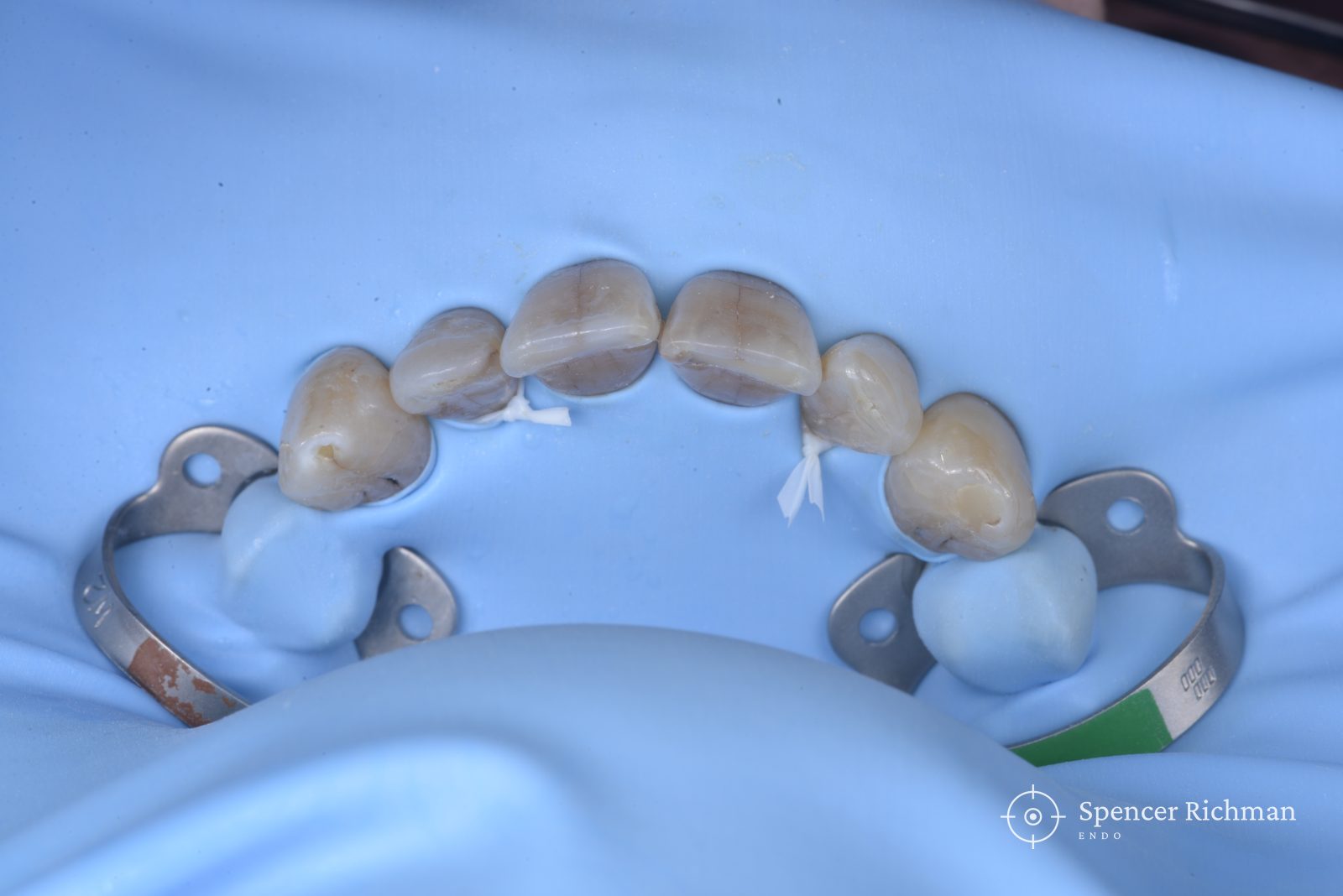
The upper front teeth isolated together under rubber dam. Clamps on the teeth at either end hold the sheet in place, and fine floss ties hold the sheet down between the teeth.
Why every root canal treatment is carried out under rubber dam
Root canal treatment removes bacteria from inside the tooth. Saliva is full of bacteria, so a tooth opened in the mouth could pick up new bacteria during the very appointment meant to remove them. The dam seals the tooth off from saliva from the first step to the last.
The solutions that disinfect the canals do their job well, and taste unpleasant. The dam keeps those solutions inside the tooth and away from your mouth and throat. The dam also means nothing small, such as a fine file, can be swallowed or breathed in.
A dry, isolated tooth is also easier to see. Working under the dental operating microscope, a clear view with nothing in the way is what lets each canal be found, cleaned and filled with care. The bonded filling that seals the tooth at the end of treatment depends on a dry surface too, and the dam keeps the tooth dry until that filling is in place.
What does a rubber dam feel like?
The tooth is numb before the dam goes on, so most people feel the clamp only as a sense of pressure or tightness around the tooth. The dam can feel unusual for the first few minutes, and most patients then forget about the dam altogether.
Many patients find the dam makes treatment easier. Water, solutions and instruments stay away from the tongue and the back of the throat, and there is no need to hold your tongue out of the way.
Can I breathe and swallow with a rubber dam on?
Yes. The sheet is trimmed so that your breathing is not restricted, and you can breathe through your nose or your mouth. Swallowing is normal too: your tongue and throat are free underneath the dam, and suction removes water before any can build up.
Feeling claustrophobic, or worried about gagging?
Some people worry about having the mouth covered. In practice, feeling claustrophobic under rubber dam is rare, because the sheet is trimmed so that breathing is not restricted. Before the dam goes on we agree a signal, usually a raised hand, and I stop whenever you use the signal. Breaks to sit up and rest are always possible.
A strong gag reflex is often easier to manage with a dam than without, because nothing touches the back of the tongue or the roof of the mouth during treatment. For patients who are very anxious, IV sedation is available at all seven practices where I work, and the dam is placed in exactly the same way.
Latex allergy
Every rubber dam I use is latex-free, so a latex allergy does not stand in the way of treatment. Tell the practice about any latex allergy all the same, so that gloves and other materials can be checked before your appointment.
What if my tooth is badly broken down?
A clamp needs enough tooth to grip, and the sheet needs the edges of the tooth to seal against. Where decay or a crack has taken away part of a wall, I rebuild the missing wall with a bonded filling first, at the same visit, before the root canal treatment begins.
Rebuilding first keeps the disinfecting solution inside the tooth, keeps blood and fluid out of the area being worked on, and confirms the tooth can be restored before treatment starts. Front teeth, back teeth and crowned teeth can all be isolated, with the dam placed a little differently for each.
Decay had taken away a wall of an upper second molar. The missing wall was rebuilt under rubber dam before the root canal treatment began, and the tooth was treated and sealed in a single visit.
 Doctify profile